Transport accounted for up to 26% of total EU greenhouse gas emissions in 2025, with road transport responsible for 72% of that total, according to the European Environment Agency. For shippers, carriers and 3PLs, that places freight and distribution squarely inside the sustainability conversation, not at its edges, yet most "sustainable logistics" discussion still treats it as a positioning statement rather than a specific, measurable set of operational choices.
Search for "sustainable logistics software" or "green logistics software" surfaces plenty of positioning content and very little that answers the actual buyer question: what does carbon-efficient logistics look like in practice, and what role does software play in achieving it. This piece is that entry point, framed around the operational decisions that actually move the needle rather than a general sustainability pitch.
What Carbon-Efficient Logistics Actually Means Operationally
Carbon-efficient logistics is not a separate workstream bolted onto existing operations. It is the accumulation of specific, measurable choices: routing freight to minimise empty running, consolidating shipments to maximise load fill, scheduling electric vehicle charging around delivery windows, and capturing the movement data needed to report emissions accurately rather than estimate them. Each of these is an orchestration decision, made at the hub or in the planning layer, long before a vehicle leaves the yard.
Why Now
Two forces are converging on logistics operators at once: regulatory reporting obligations under CSRD and the EU Emissions Trading System's extension to shipping and, from 2027, road transport fuels under ETS2, and commercial pressure from shippers who increasingly ask their logistics partners for carbon data as a condition of doing business. Both point in the same direction, toward operational data that is accurate, granular and captured at the source, rather than modelled after the fact.
The Structural Problem: Sustainability Initiatives Sit Apart From Daily Operations
Most sustainability reporting today is built on estimates: average emissions factors applied to total distance travelled or total freight volume, rather than the actual routing, load fill and handling decisions made shipment by shipment. That approach can produce a number for a disclosure, but it cannot tell an operator which specific route, which specific hub, or which specific fleet decision is driving emissions up or down, which means the sustainability function and the operations function are often working from entirely different pictures of the same network.
The practical consequence is that sustainability targets rarely translate into operational change. A target to cut network emissions by a given percentage says nothing about which routes to consolidate, which hub to prioritise for electric vehicle rollout, or which carrier relationships are adding unnecessary empty miles. Without that operational granularity, a sustainability commitment stays a commitment rather than becoming a set of decisions someone at the hub or in the planning team can actually act on.
Five Operational Levers for Carbon-Efficient Logistics
- Consolidate shipments to maximise load fill. Fewer, fuller vehicle movements reduce emissions per unit shipped without requiring any change in total freight volume.
- Route to minimise empty running and unnecessary distance. Orchestration across carriers and modes reduces deadhead miles that add emissions without adding delivered value.
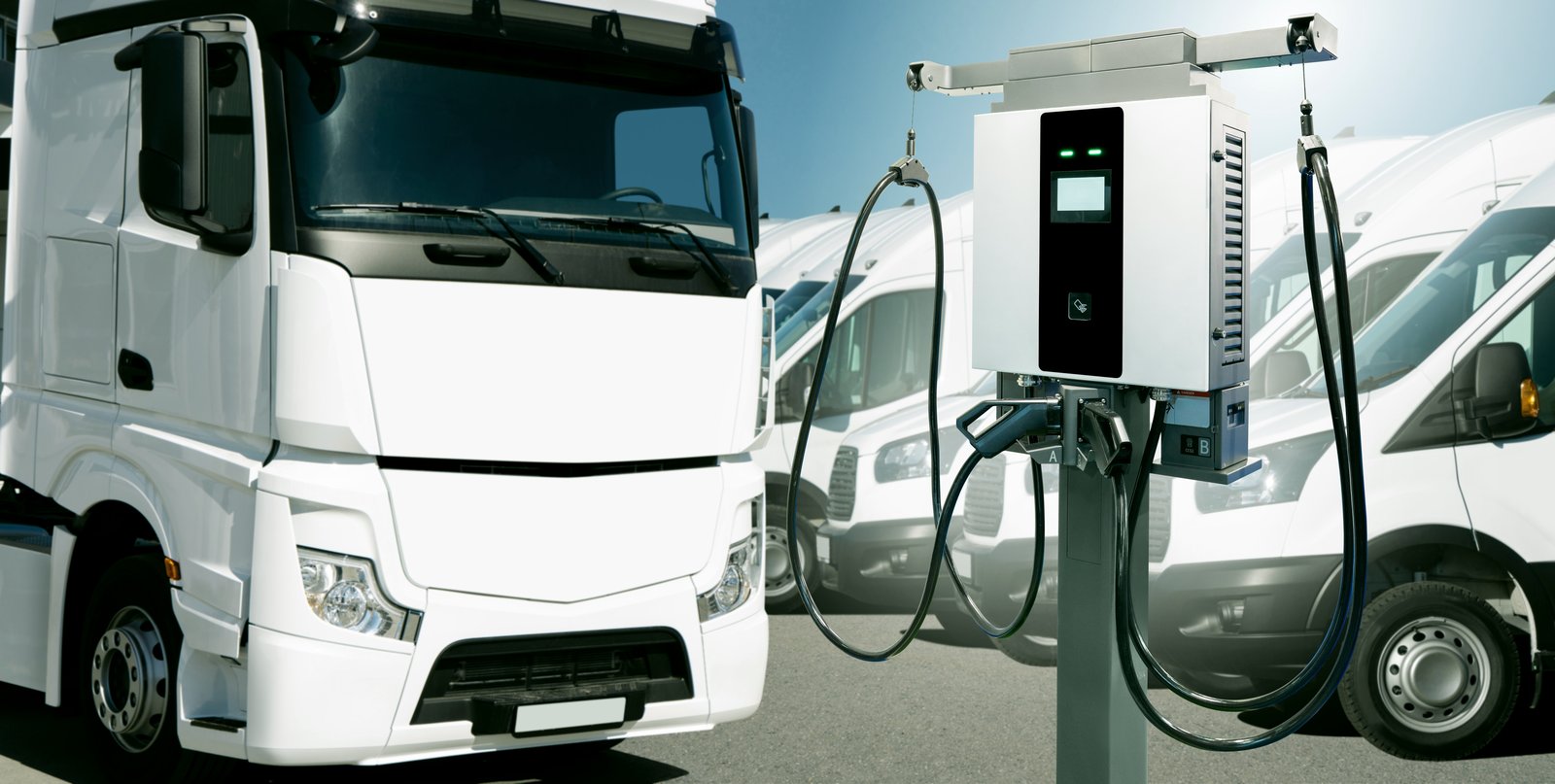
- Schedule electric vehicle charging around operational need. Charging windows aligned to delivery schedules keep electric fleets usable at scale rather than constrained by charger availability.
- Capture movement and handling events as operational data. Distance, mode, dwell time and load fill recorded as they happen replace modelled estimates with traceable figures.
- Structure that data to a recognised emissions methodology. Applying a standard such as ISO 14083 turns operational events into figures that feed both internal decision-making and external disclosure.
How MIXMOVE Supports Carbon-Efficient Orchestration
MIXMOVE is an Intelligent Logistics Orchestration Platform. MIXMOVE HUB OS gives hub operators the execution control to consolidate shipments, manage load fill and schedule electric vehicle charging around real operational demand. MIXMOVE DI applies the ISO 14083 methodology to structure the resulting movement data for Scope 3 and broader emissions reporting, the same operational data layer that underpins CSRD Scope 3 disclosure and EV fleet charging scheduling. MIXMOVE's confirmed regulatory scope remains CSRD and ETS2; it does not extend into ViDA, the Digital Product Passport, CBAM or EUDR as MIXMOVE deliverables.
Two deeper looks sit beneath this one: how warehouse and hub data feeds CSRD Scope 3 reporting, and how EV fleet charging scheduling works at the hub. Both are operational expressions of the same carbon-efficiency logic described here, and both are worth reading in full for the teams responsible for emissions reporting and fleet operations respectively.
MIXMOVE operates as an orchestration layer above existing WMS, TMS and ERP systems, connecting through REST API, EDI, eFTI and webhooks, or as a standalone platform. Either way, the carbon-relevant data originates from the same hub and fleet event capture that already drives operational performance, rather than a separate sustainability-only system.
Sustainable Logistics Is an Operational Discipline, Not a Reporting Exercise
Carbon-efficient logistics is built from the same orchestration decisions that already drive cost and service performance: load fill, routing, scheduling and data capture. Treating sustainability as a separate initiative, disconnected from daily hub and fleet operations, produces reporting without improvement. Treating it as an operational discipline produces both.
See how MIXMOVE's orchestration platform supports carbon-efficient hub and fleet operations. Request an Operations Review.
Frequently Asked Questions
What does sustainable logistics software actually do?
It gives operators the execution control to consolidate shipments, optimise routing and load fill, and schedule electric vehicle charging, while capturing the operational data needed to report emissions accurately rather than estimate them.
Is MIXMOVE's regulatory scope limited to CSRD and ETS2?
Yes. MIXMOVE's confirmed regulatory scope is CSRD and ETS2. It does not extend into ViDA, the Digital Product Passport, CBAM or EUDR as MIXMOVE deliverables.
How does hub-level orchestration reduce transport emissions?
By maximising load fill, minimising empty running, and scheduling electric vehicle charging around real delivery demand, all of which reduce emissions per unit shipped without requiring a reduction in freight volume.
How much of EU greenhouse gas emissions come from transport?
Transport accounted for up to 26% of total EU greenhouse gas emissions in 2025, with road transport responsible for 72% of that total, according to the European Environment Agency.