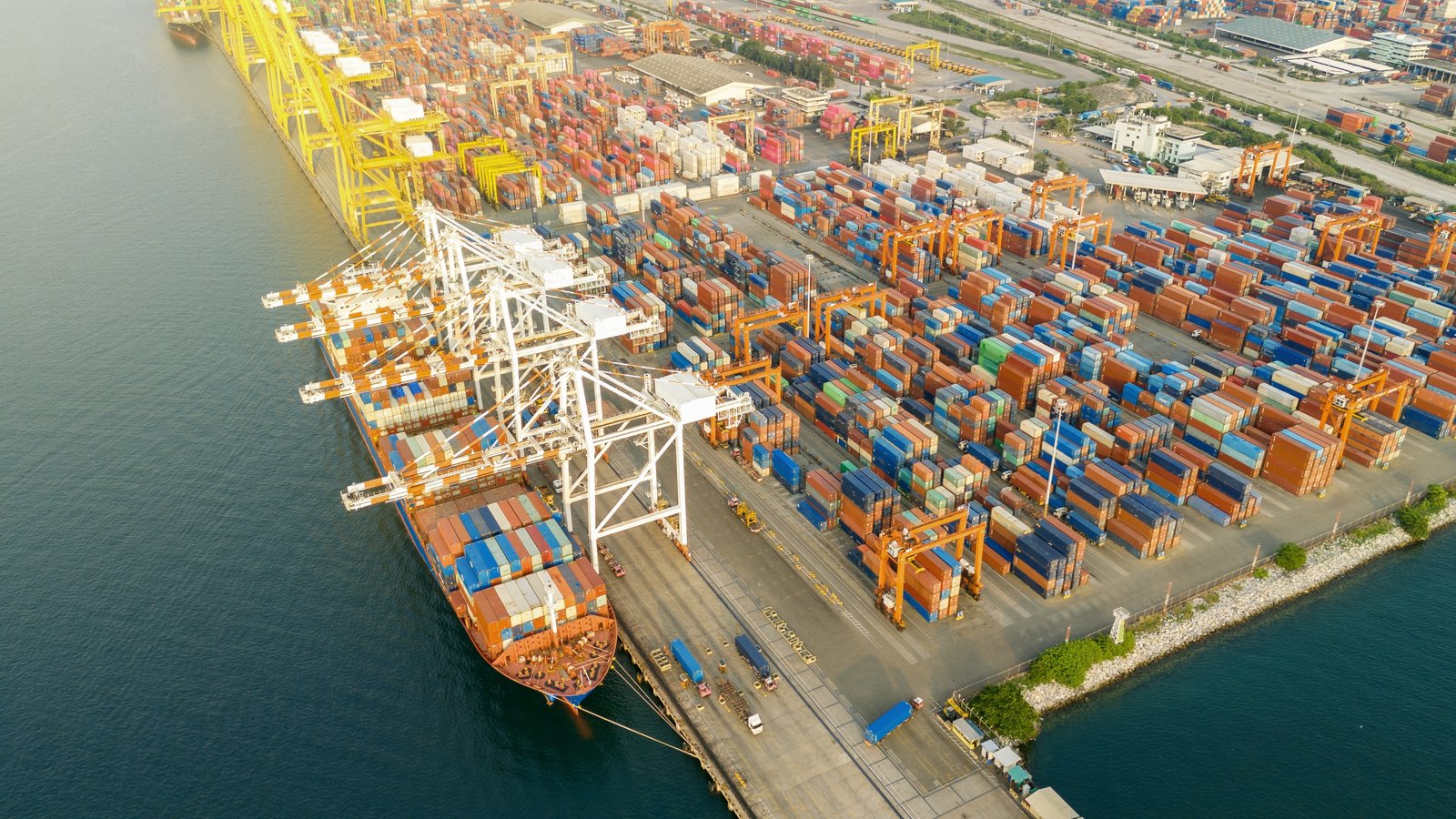
Deloitte found that 66% of retail executives surveyed plan to restructure their supply chains through measures including onshoring, nearshoring, and supplier diversification if input costs rise.
Restructuring the supply base changes the flows a distribution network was designed to carry. Most networks are then redesigned when a property lease expires rather than when the design stops matching the demand. What follows is what the hub and spoke model assumes, the signals that those assumptions have broken, and the sequence a redesign should follow.
What the hub and spoke model is
A hub and spoke network routes volume through a central facility, the hub, which consolidates, sorts, and dispatches to outlying points, the spokes. Direct point-to-point movement between spokes is avoided in favour of routing through the centre.
The model buys consolidation. By forcing volume through one point, it creates enough density to fill vehicles that individual lanes could never fill alone.
MIXMOVE frames the trade differently. A hub and spoke network trades distance for density. Every consignment travels further than the direct route in exchange for travelling in a fuller vehicle. The design works while that trade remains favourable, and it stops working quietly, long before anyone notices.
Why the model was built this way
Consolidation was the only available answer to low lane density. When each destination generates too little volume to fill a vehicle, routing through a common point is the mechanism that creates a full load.
The model also concentrated capability. Sortation equipment, systems, and skilled staff sat in one place rather than being replicated across every site, which made the hub the cheapest place to add capacity.
Why networks are being reopened now
Demand has dispersed. Volume that once concentrated on a small number of large destinations now spreads across many smaller ones, which weakens the density argument that justified the detour.
Order profiles have fragmented. Mixed loads, direct-to-store flows, and returns all run through infrastructure designed for bulk replenishment.
Property and labour costs have risen unevenly, which means the location that was cheapest when the network was designed may now be the most expensive constraint in it.
Emissions carry a cost. Under CSRD, transport emissions sit inside statutory disclosure, and under ETS2 they attract a direct charge. The extra distance a hub and spoke network deliberately adds is now a reported and priced figure.
Why the redesign usually arrives too late
Networks degrade gradually. No single day produces a failure large enough to trigger a review, so the deterioration is absorbed as normal operating variance.
The systems in place reinforce the delay. Transport management systems report cost per lane against the plan, which shows a network performing to a design nobody has re-examined. Warehouse management systems report throughput at each site in isolation. Neither compares the network as built against the demand as it now exists.
McKinsey research into mid-mile and last-mile handovers found that waste created at blind handoffs between shippers, dispatchers, third-party logistics providers, and carriers accounts for between 6% and 13% of carrier revenue. In a hub and spoke network, every consignment passes through at least one such handoff by design.
Six signals that a redesign is overdue
Cost per drop rising while volume stays flat. The clearest early signal. It indicates the network is working harder to move the same freight.
Fill rates falling on spoke legs. The density the hub was built to create is no longer reaching the outbound legs.
Recurring congestion at the hub during normal weeks. Peak congestion is expected. Congestion outside peak means the hub is at structural capacity rather than seasonal capacity.
Growing volume of direct shipments bypassing the hub. When operational teams route around the design, the design has already failed.
Delivery windows missed on the same lanes repeatedly. Consistent lane-level failure points to structural distance rather than to incident.
Entry into destinations the network was not designed to reach. Geographic or channel expansion changes the demand shape faster than the physical network can follow.
The five-step redesign sequence
Establish what the network is actually carrying. Actual flows at item level over a full demand cycle, not planned flows. Most redesigns fail because they optimise against the plan rather than against reality.
Test the hub location against current demand centres, not historical ones. The optimal point moves as demand disperses. Confirm whether the existing site is still defensible before assuming it needs replacing.
Assess spokes individually. Identify underperforming legs, compare them against the strongest, and determine whether the cause is route, frequency, or fill rate. Merge, relocate, or convert to direct shipment only after that cause is known.
Model the cost and service trade-off explicitly. More spokes improve service and raise cost. Fewer spokes do the reverse. Neither extreme is correct, and the balance point should be a decision rather than an accident.
Phase implementation and run it outside peak. Reconfiguring while capacity is already committed converts a planned change into a live incident.
The three layers a redesign must address
Physical. Hub location, spoke count, and site capacity. The slowest and most expensive layer to change.
Orchestration. How freight is allocated, sequenced, and routed within the physical design. Changeable in weeks rather than years.
Intelligence. The record of what the network actually did, used to test whether the redesign delivered what it promised.
Most redesign programmes address only the first layer, which is why the results frequently disappoint. A hub is not congested because it is in the wrong place. It is congested because too much freight is resting in it, and resting is an orchestration decision.
What the evidence shows
Deloitte reports that 30% of retailers surveyed use AI for supply chain visibility, expected to rise to 41% within a year, with 59% anticipating positive return on investment from supply chain AI initiatives within 12 months.
McKinsey attributes between 6% and 13% of carrier revenue to waste at handover points, with dwell time named as a leading driver.
Across MIXMOVE deployments, hub operations have recorded up to 130% higher warehouse hub throughput, up to 50% less warehouse space, up to 80% fewer errors, and up to 58% labour cost savings. Dwell time reductions of 40% and fill rate improvements of 10% to 20% have been recorded. The platform is in use across 35+ distribution companies in 20+ countries.
At 3M, a decade of collaboration produced a 90% truck fill rate, a 35% reduction in transport costs, and a 50% reduction in CO₂ emissions.
“By using the MIXMOVE software, 3M managed to reduce transport costs by 35% and CO₂ emissions by 50%.”
— Patrick Van De Vyver, Former Head of EMEA Logistics Operations, 3M
How MIXMOVE HUB OS reduces the need to move buildings
Before committing capital to new sites, the orchestration layer is worth exhausting. MIXMOVE HUB OS identifies inbound freight at item level on arrival and matches it against live outbound commitments, so freight with an onward departure flows through rather than resting. Recorded throughput gains of up to 130% mean many hubs described as capacity-constrained are in fact sequence-constrained.
Spoke allocation is decided against live downstream state rather than a fixed plan, which raises fill rate on the legs where hub and spoke networks lose their advantage.
MIXMOVE HUB OS operates alongside an existing TMS, WMS, or ERP as an orchestration layer, or as a standalone platform.
MIXMOVE DI provides the measurement layer a redesign needs. Flows, utilisation, dwell, and service performance are captured as they happen, with Scope 3 transport reporting structured to ISO 14083 methodology, so the emissions consequence of a network change can be reported from execution data rather than modelled.
A network fails gradually and gets rebuilt suddenly. The signals arrive years before the lease does. Operations that measure flow rather than plan can act on them while the change is still cheap.
Read the MIXMOVE DI overview to see how network performance is measured from execution data.
Frequently asked questions
What is a hub and spoke model?
A distribution design that routes volume through a central facility, which consolidates and sorts freight before dispatching it to outlying destinations. It trades additional distance for higher vehicle utilisation.
When should a network redesign be carried out?
When the signals indicate the design no longer matches demand, particularly rising cost per drop against flat volume, falling fill rates on spoke legs, and congestion at the hub outside peak periods. Implementation should be scheduled outside peak trading.
How often should a distribution network be redesigned?
Physical redesign is disruptive and expensive, so it is typically revisited every few years or when demand shape changes materially. Orchestration changes within the existing physical design can be made continuously and should be exhausted first.
Does a congested hub always need relocating?
No. Congestion frequently reflects freight resting unnecessarily rather than insufficient physical capacity. Testing throughput under improved sequencing before committing capital often removes the case for relocation.