Maximise freight. Minimise capacity costs.
MIXMOVE consolidates shipments and manages capacity and execution across road, rail, sea, and air, connecting from the first mile to the last mile. Helping teams optimise transport decisions and maintain end-to-end visibility.
Measurable results across transport networks.
Transport gets expensive when capacity decisions happen too late.
Transport costs stay high when every shipment, carrier and site is planned in isolation.
Transport is often one of the largest cost lines in logistics, and one of the hardest to optimise at scale. When planning, execution and network data are spread across different systems and teams, it becomes harder to consolidate loads, reduce empty movement and see the full cost and carbon impact of each shipment.

Without a forward view of orders and expected volumes, teams may need to secure capacity at short notice.

Transport availability becomes more constrained as volumes rise and lead times shrink.

Finding the right carrier, capacity and price can require manual coordination across providers

Road, sea and air movements may be managed independently even when they form part of the same shipment journey.

Visibility and planning can break between consolidated transport and local delivery operations.
How MIXMOVE solves transport orchestration
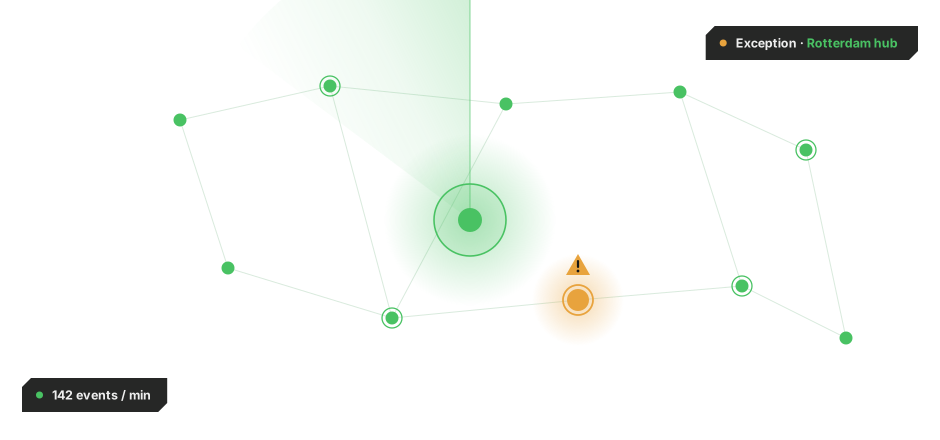
MIXMOVE connects transport demand, carrier capacity and execution in one orchestration layer. Teams can anticipate what needs to move, secure the right transport earlier and coordinate road, rail, sea and air movements in one shared operational view, while maintaining visibility from origin through final distribution.

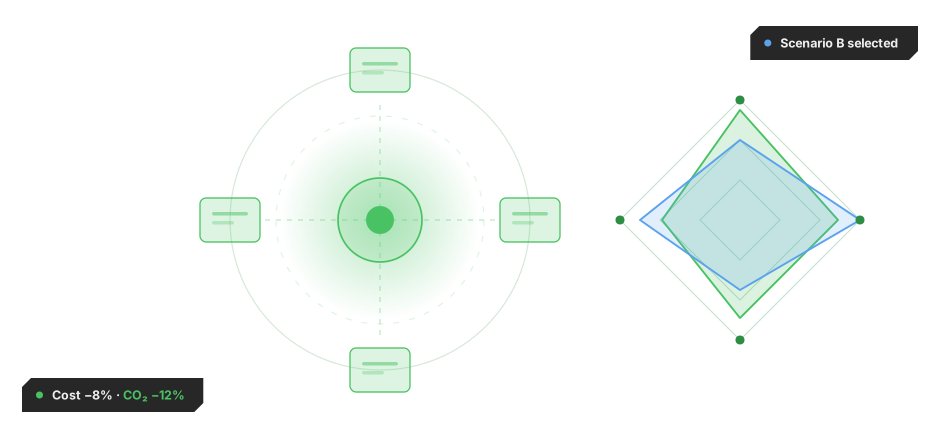
Forecast transport demand
Use order, shipment and network data to anticipate upcoming capacity needs before transport becomes urgent or expensive.
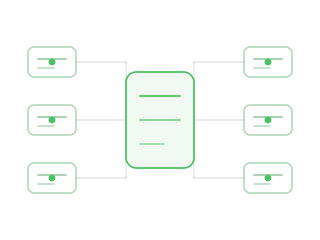

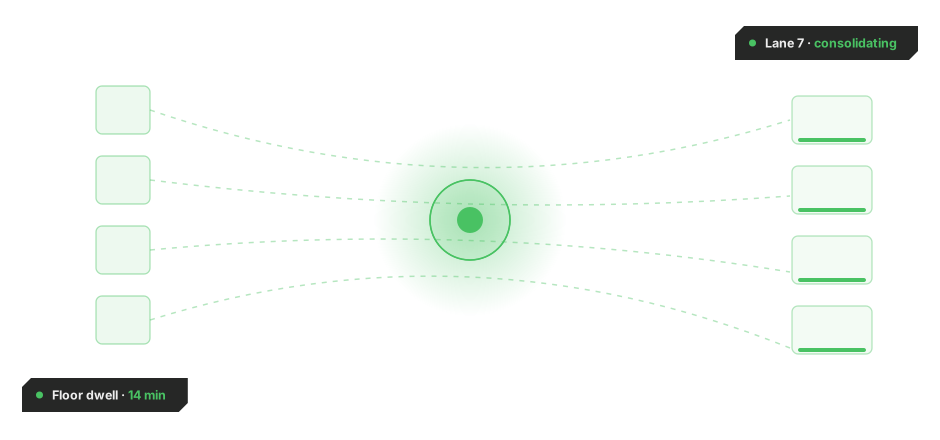
Maximise full-loads to minimise costs
Match volume, cost and service requirements with dedicated loads, consolidated freight and multimodal options across road, rail, sea and air
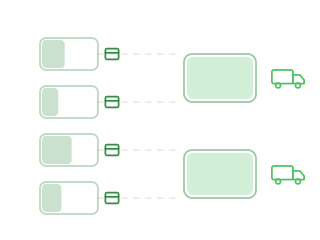

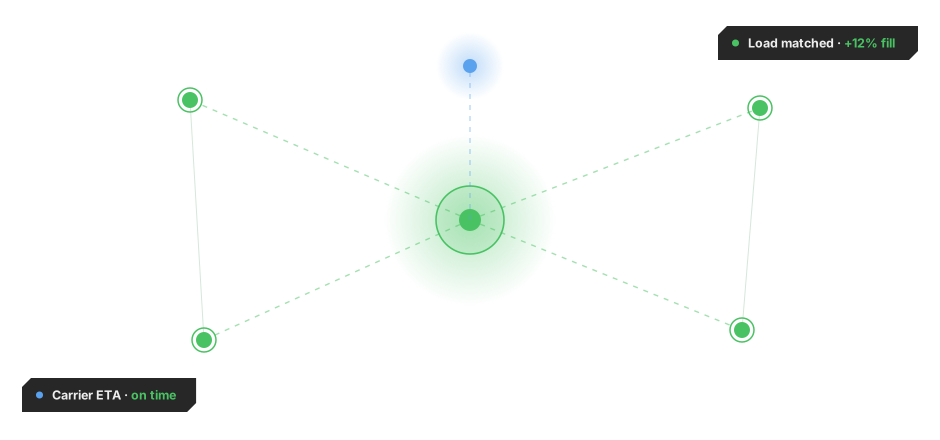
Connect long-haul and final distribution
Coordinate full-load, consolidated and local delivery flows in one connected journey, keeping visibility across handovers from origin transport through final distribution.
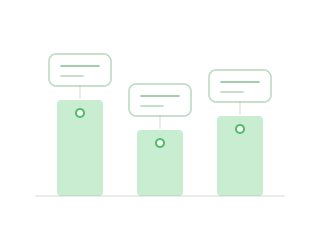
From transport demand to network-level optimisation
MIXMOVE connects transport demand, capacity and execution across carriers and transport modes, helping teams plan earlier, secure the right capacity and keep transport coordinated from origin through final distribution.

Capture transport demand
Bring expected orders, shipment volumes and transport requirements into one planning view.

Forecast capacity needs
Identify upcoming transport requirements early enough to secure capacity and avoid costly last-minute sourcing.

Choose the right transport strategy
Match volume and service requirements with full truckloads, consolidated transport or multimodal options across road, rail, sea and air.

Coordinate carriers and shipments
Source capacity, assign transport partners and keep movements visible as shipments progress.

Connect long-haul with final distribution
Coordinate consolidated transport, cross-dock handovers and local delivery so visibility continues through the wider journey.
MIXMOVE HUB OS + MIXMOVE DI
MIXMOVE solution for Transportation Management connects transport demand, carrier capacity and execution across road, rail, sea and air, connecting first-mile to last-mile, while working alongside your existing TMS, WMS, ERP and Order Management systems — combining execution capability from MIXMOVE HUB OS with decision intelligence from MIXMOVE DI.
Connects transport demand, carrier networks and execution across existing TMS, WMS and ERP systems without disrupting operations. Integration in weeks, not months.
“By using the MIXMOVE software, 3M managed to reduce transport costs by 35% and CO₂ emissions by 50%.”
Patrick Van De Vyver — Former Head of EMEA’s Logistics Operations, 3M
transport fill rates
lower logistics costs
CO₂ reduction