
Results achieved with MIXMOVE HUB OS
Success story
DSV
DSV

How DSV achieved 30% higher hub throughput and 80% fewer errors — in 12 weeks per hub
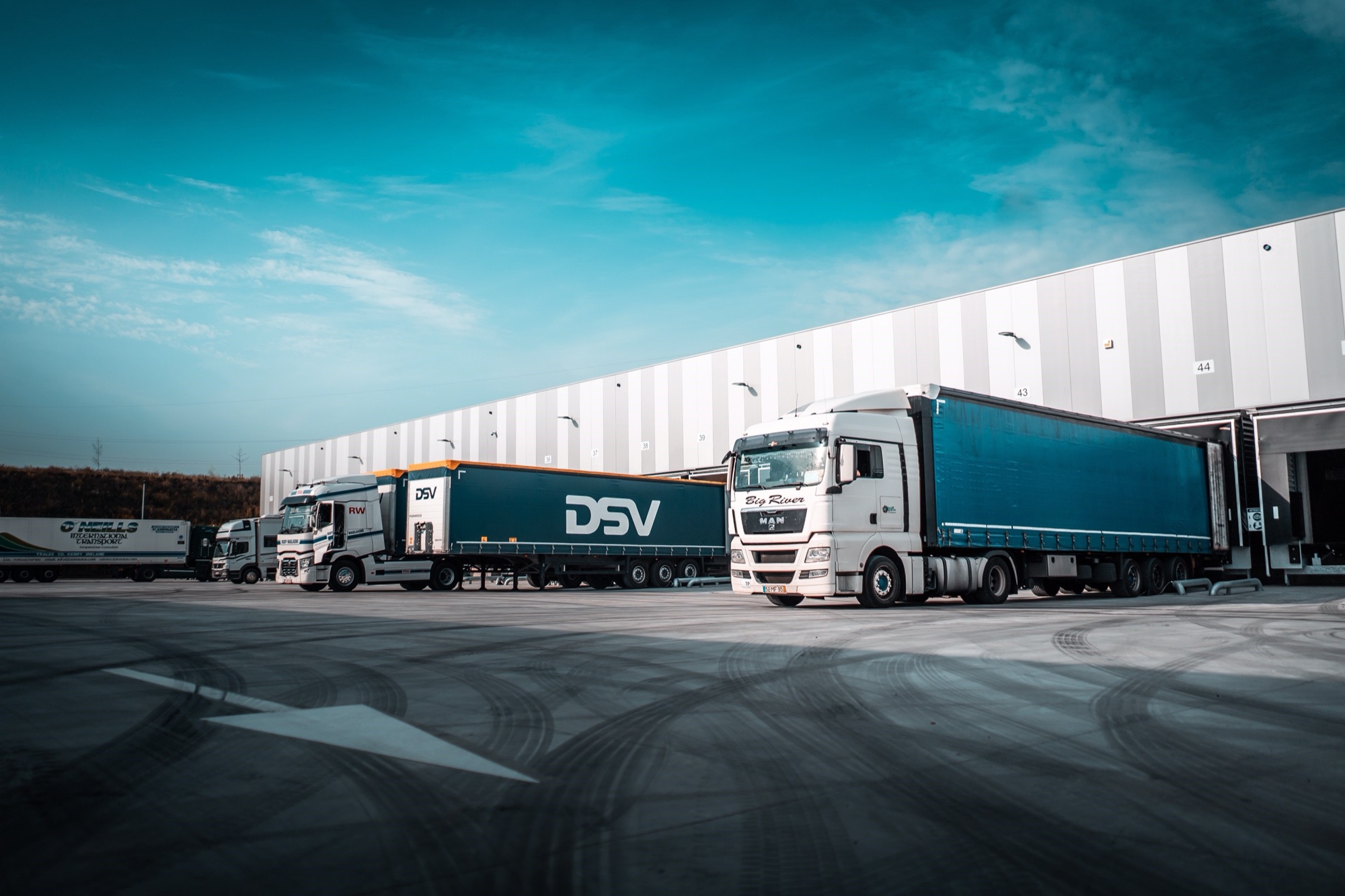
Industry
Transport & Logistics (3PL)
Geography
Germany & Denmark
Product deployed
MIXMOVE HUB OS
Deployment
12 weeks per hub
How DSV achieved 30% higher hub throughput and 80% fewer errors — in 12 weeks per hub
MIXMOVE HUB OS
30%
Hub throughput increase with same resources
80%
Reduction in operator errors
Results achieved with MIXMOVE HUB OS
30%
Hub throughput increase with same resources
80%
Reduction in operator errors
12wk
Go-live timeline per hub
2
Hubs deployed (Germany & Denmark)
30%
Hub throughput increase with same resources
80%
Reduction in operator errors
12wk
Go-live timeline per hub
2
Hubs deployed (Germany & Denmark)
#1
Preferred 3M supplier: Germany & Denmark
Hub space required for same volume
Visibility for DSV and its customers
100%
Real-time KPI reporting across both hubs
02

Executive summary

01
The challenge

3M mandated DSV’s use of MIXMOVE HUB OS at two Central European cross-docking hubs — Germany and Denmark — to become compliant with 3M’s supply chain requirements. The root operational problem: non-stackable, customer-specific pallets that loaded trucks to only 35–45% capacity, creating inefficiency, excess cost, and poor visibility across the entire inbound-to-outbound flow.

02
The solution

MIXMOVE HUB OS was deployed at DSV’s Germany and Denmark hubs in 12 weeks per hub, integrating directly with DSV’s existing WMS and TMS systems. The platform replaced manual, operator-dependent cross-docking with intelligent inbound planning, parcel-level consolidation and reconstruction, automated outbound execution, and real-time visibility — for DSV and its customers.

03
Results — confirmed
  • Up to 30% hub throughput increase — with the same resources and floor space
  • Up to 80% reduction in operator errors — through SSCC scanning and guided execution
  • Reduced hub space required — through dynamic, flow-based space utilisation
  • Real-time KPI reporting across both hubs — available to DSV and to DSV’s customers
  • DSV designated as one of 3M’s preferred suppliers in Germany and Denmark — a direct commercial outcome of the deployment
  • 12-week go-live per hub — connecting to DSV’s existing WMS and TMS with no system replacement
03

Customer overview

DSV A/S is a Danish transport and logistics company offering transport services globally by road, air, sea and rail. With more than 80 countries of operation across six continents, DSV ranks among the largest logistics providers in the world — and its scale carries a corresponding obligation: thousands of enterprise customers depend on DSV to deliver consistent performance regardless of geography, sector, or complexity.

Among those customers is 3M, whose EMEA logistics network moves goods from multiple factories through a network of third-party logistics hubs to customers in more than 30 countries. When 3M restructured its European supply chain around the MIXMOVE HUB OS platform, DSV’s hubs in Germany and Denmark became part of that programme — and DSV’s performance there would come to redefine its position in 3M’s supplier hierarchy.

04
The challenge

The 3M mandate: compliance through performance

DSV’s deployment of MIXMOVE HUB OS did not begin with a traditional sales process. 3M mandated the platform across its European 3PL network — DHL, DSV, and Gebrüder Weiss — to standardise cross-docking execution, performance data, and service levels across every hub handling 3M freight. For DSV, compliance was a commercial requirement of the 3M relationship.

The operational challenges at the two Central European hubs were characteristic of high-volume cross-docking operations running on legacy processes. Inbound pallets from 3M factories were customer-specific and non-stackable, loading trucks to only 35–45% of capacity. Hub floor operations relied on manual coordination — static lane assignments, operator experience, and paper-based processes — which constrained throughput and produced error rates that had direct customer-service consequences.

Beyond execution, DSV faced a visibility gap: 3M required standardised KPI reporting and real-time operational transparency across its network, and DSV’s existing systems could not produce that data in the required form.

Four specific challenges driving the deployment
Inefficient truck space utilisation
Non-stackable, customer-specific pallets consistently loading trucks at 35–45% capacity — driving excess transport cost and carbon emissions across the 3M network
Manual, operator-dependent execution
Cross-docking tasks were assigned and managed manually, creating high error exposure and making performance inconsistent between shifts and operators
No standardised KPI framework
DSV could not provide 3M with the auditable, KPI-centric performance data required under 3M’s supply chain standards — a direct compliance gap
Limited visibility for DSV and its customers
Without real-time monitoring across inbound, hub, and outbound flows, both DSV’s operations teams and 3M’s logistics leadership were working from incomplete, delayed data
05
The solution

MIXMOVE HUB OS: deployed at DSV Germany and Denmark in 12 weeks per hub

MIXMOVE deployed MIXMOVE HUB OS at DSV’s Germany and Denmark hubs in a 12-week go-live per hub — connecting to DSV’s existing WMS and TMS environments via API integration, with no system replacement and no disruption to live hub operations during rollout.

The platform introduced intelligent cross-docking execution at both sites: inbound shipments arriving from 3M factories are scanned and validated against advance shipment notifications, dynamically assigned to lanes based on live volume and destination, consolidated at parcel level into full-height mixed pallets, and dispatched on optimised outbound loads — with every movement captured digitally and every KPI reported in real time to both DSV and 3M.

06
Causal chain

Why pallet consolidation is the primary result — not one of several

The relationship between the headline results is causal, not parallel.
primary
Parcel-level consolidation and reconstruction
Replacing non-stackable, customer-specific pallets with destination-optimised, full-height mixed pallets — the primary operational improvement MIXMOVE HUB OS delivered.
consequence
30%
Hub throughput increase
The same resources process more volume through smarter consolidation and dynamic floor space utilisation.
consequence
80%
Error reduction
SSCC barcode scanning and step-by-step operator guidance replace the operator-dependent manual process that created errors.
consequence
Reduced hub space required
Dynamic lane assignment and flow-based space utilisation replace static layouts, handling more volume in the same footprint.
outcome
Preferred supplier status with 3M
The commercial outcome — the result of delivering the compliance, visibility, and performance standardisation that 3M required.
primary
Parcel-level consolidation and reconstruction
Replacing non-stackable, customer-specific pallets with destination-optimised, full-height mixed pallets — the primary operational improvement MIXMOVE HUB OS delivered.
consequence
30%
Hub throughput increase
The same resources process more volume through smarter consolidation and dynamic floor space utilisation.
consequence
80%
Error reduction
SSCC barcode scanning and step-by-step operator guidance replace the operator-dependent manual process that created errors.
consequence
Reduced hub space required
Dynamic lane assignment and flow-based space utilisation replace static layouts, handling more volume in the same footprint.
outcome
Preferred supplier status with 3M
The commercial outcome — the result of delivering the compliance, visibility, and performance standardisation that 3M required.
primary
Parcel-level consolidation and reconstruction
Replacing non-stackable, customer-specific pallets with destination-optimised, full-height mixed pallets — the primary operational improvement MIXMOVE HUB OS delivered.
consequence
30%
Hub throughput increase
The same resources process more volume through smarter consolidation and dynamic floor space utilisation.
consequence
80%
Error reduction
SSCC barcode scanning and step-by-step operator guidance replace the operator-dependent manual process that created errors.
consequence
Reduced hub space required
Dynamic lane assignment and flow-based space utilisation replace static layouts, handling more volume in the same footprint.
outcome
Preferred supplier status with 3M
The commercial outcome — the result of delivering the compliance, visibility, and performance standardisation that 3M required.

Presenting these as parallel results would misrepresent how MIXMOVE HUB OS creates value. The headline is consolidation at the hub. The rest follows from it.

07
Capabilities

Key capabilities deployed

Inbound planning & ASN processing
Leverages data from inbound flows and customer orders to inform optimum hub planning — replacing reactive, uncoordinated inbound management
Parcel-level consolidation & reconstruction
Breaks incoming pallets into individual parcels and rebuilds them into destination-optimised, full-height mixed pallets — eliminating the structural inefficiency of non-stackable factory pallets
Dynamic lane assignment
Allocates pallets and cages to lanes based on real-time availability — optimising floor space utilisation and enabling faster outbound loading
Handheld operator guidance
MIXMOVE’s execution plans are translated into step-by-step operator tasks via handheld devices — removing operator dependency and driving error reduction
Outbound planning & execution
Creates optimised outbound pallet architectures enabling multiple products to be shipped in efficient, consolidated loads
Real-time shop floor monitoring
Full visibility of all hub activities — inbound flows, task management, lane assignment, and outbound loading — available to DSV’s operations teams in real time
Customer-facing visibility & KPI reporting
The same real-time visibility is available to DSV’s customers, providing transparency on expected shipments and enabling KPI-centric performance reporting
API & batch integration with TMS/WMS
Connects to DSV’s existing transport and warehouse management systems without requiring system replacement
Documentation & labelling
Streamlined documentation and labelling processes, reducing administrative overhead and improving traceability across the hub

All capabilities listed are deployed and delivering results across both hubs.

08

Implementation & approach

MIXMOVE deployed at DSV’s Germany hub first, then Denmark, each going live within 12 weeks of deployment start. The deployment connected to DSV’s existing TMS and WMS environments via API integration — no system replacement, no operational disruption to live hub activities during the rollout.

The implementation was shaped by the three-party relationship between MIXMOVE, DSV, and 3M. 3M’s supply chain requirements defined the operational standards the platform needed to meet — the KPI framework, the compliance reporting structure, and the visibility requirements for 3M’s own network operations team. DSV’s hub operations teams defined the execution model — how work tasks were assigned, how reconstruction was managed, and how outbound loads were structured. MIXMOVE’s implementation specialists managed integration, configuration, and go-live support.

The 12-week timeline per hub is a significant proof point. For an enterprise logistics operator deploying a new execution platform at a live, high-volume cross-docking hub — without taking the hub offline or disrupting customer flows — 12 weeks from deployment start to full operational go-live represents a materially lower implementation risk than comparable programmes.

09
Results & impact

What the deployment has delivered

Area
Before
After
Pallet utilisation
Before
Non-stackable, customer-specific pallets at 35–45% truck fill
After
Destination-optimised mixed pallets — significantly improved truck fill rates
Hub throughput
Before
Baseline — constrained by manual coordination and static layouts
After
Up to 30% increase with the same resources and floor space
Operator errors
Before
High — manual, operator-dependent task assignment with no scan verification
After
Up to 80% reduction through SSCC scanning and step-by-step guided execution
Hub space required
Before
Fixed by static lane assignments; congestion at peak volume
After
Reduced — dynamic lane assignment handles more volume in the same footprint
Inbound visibility
Before
Reactive — no advance shipment data, planning based on arrival
After
Full inbound predictability via ASN processing — resource planning before trucks arrive
Customer KPIs
Before
No standardised reporting; 3M compliance gap
After
Real-time KPI capture and reporting across both hubs — available to 3M and to DSV
Supplier status
Before
Standard DSV/3M relationship
After
DSV designated preferred 3M supplier for Germany and Denmark
Go-live timeline
Before
N/A — no prior dedicated solution
After
12 weeks per hub — no system replacement, no operational disruption
  • Up to 30% hub throughput increase with the same resources and floor space — driven by parcel-level consolidation, dynamic lane assignment, and optimised outbound pallet architecture
  • Up to 80% reduction in operator errors — through SSCC barcode scanning at inbound, automated task assignment via handheld devices, and step-by-step execution guidance removing operator-dependent decision-making
  • Reduced hub space required for the same volume — dynamic lane assignment replaces static layouts, handling more throughput in the same footprint without facility expansion
  • Real-time visibility across all hub activities — inbound flows, task status, lane occupation, and outbound loading progress — available to DSV’s operations teams and to 3M’s logistics leadership
  • Standardised KPI reporting across both Germany and Denmark hubs — enabling auditable performance data in the format 3M’s supply chain requirements demanded
  • 12-week go-live per hub — connecting to DSV’s existing WMS and TMS with no system replacement and no disruption to live hub operations
  • DSV designated as one of 3M’s preferred logistics suppliers in Germany and Denmark — the direct commercial outcome of compliance, performance, and visibility standards being met
10

Customer voice

Working with MIXMOVE has led to us working and optimising even more effectively. Thanks to transparency and overview provided by MIXMOVE, we can serve the needs of our customers even better.

DSV
Georgios Diamantidis
Team Lead, Dispatching Incoming Traffic National Road

MIXMOVE has identified our needs and helped tremendously in the solution to better structure and optimise our processes.

DSV
Axel Binder
Senior Team Lead, Incoming Groupage and Domestic
11
Strategic value

What the deployment proves

The DSV deployment demonstrates something that every 3PL operator managing high-volume cross-docking for enterprise shippers should take note of: a platform mandate from a major customer can be the trigger for a fundamental transformation in operational performance. DSV adopted MIXMOVE HUB OS because 3M required it. Within 12 weeks of go-live at each hub, the platform had delivered results that went far beyond compliance — 30% more throughput, 80% fewer errors, and a commercial elevation to preferred supplier status.

For any 3PL evaluating whether to invest in dedicated cross-docking execution technology, the DSV story is the reference case. The question is not whether the gains are achievable — they are confirmed and measured. The question is whether to wait for a customer to mandate the change, or to move ahead of that mandate and gain the competitive advantage first.

With more responsive and agile hubs in both Germany and Denmark, and a standardised approach to cross-docking operations that can be replicated across the network, DSV is now positioned to use the capability as a differentiator — not just with 3M, but with prospective customers evaluating which logistics partner can offer verifiable, data-driven hub performance.

Why the broader market should take note
Inefficient truck space utilisation
Non-stackable, customer-specific pallets consistently loading trucks at 35–45% capacity — driving excess transport cost and carbon emissions across the 3M network
Manual, operator-dependent execution
Cross-docking tasks were assigned and managed manually, creating high error exposure and making performance inconsistent between shifts and operators
No standardised KPI framework
DSV could not provide 3M with the auditable, KPI-centric performance data required under 3M’s supply chain standards — a direct compliance gap
Limited visibility for DSV and its customers
Without real-time monitoring across inbound, hub, and outbound flows, both DSV’s operations teams and 3M’s logistics leadership were working from incomplete, delayed data
Success Stories
/
DSV
Transport & Logistics

How DSV achieved 30% higher hub throughput and 80% fewer errors — in 12 weeks per hub

DSV’s strong relationship with 3M has MIXMOVE’s X-Dock software largely to thank, as the company’s productivity, visibility and efficiency have all reached new performance levels.

Success story image
Company
DSV
Industry
Transport & Logistics
Location
Germany & Denmark
Solution
MIXMOVE HUB OS

The context

DSV A/S is a Danish transport and logistics company offering transport services globally by road, air, sea and rail. With more than 80 countries of operation across six continents, DSV ranks among the largest logistics providers in the world — and its scale carries a corresponding obligation: thousands of enterprise customers depend on DSV to deliver consistent performance regardless of geography, sector, or complexity.

Among those customers is 3M, whose EMEA logistics network moves goods from multiple factories through a network of third-party logistics hubs to customers in more than 30 countries. When 3M restructured its European supply chain around the MIXMOVE HUB OS platform, DSV’s hubs in Germany and Denmark became part of that programme — and DSV’s performance there would come to redefine its position in 3M’s supplier hierarchy.

The challenges

DSV’s deployment of MIXMOVE HUB OS did not begin with a traditional sales process. 3M mandated the platform across its European 3PL network — DHL, DSV, and Gebrüder Weiss — to standardise cross-docking execution, performance data, and service levels across every hub handling 3M freight. For DSV, compliance was a commercial requirement of the 3M relationship.

The operational challenges at the two Central European hubs were characteristic of high-volume cross-docking operations running on legacy processes. Inbound pallets from 3M factories were customer-specific and non-stackable, loading trucks to only 35–45% of capacity. Hub floor operations relied on manual coordination — static lane assignments, operator experience, and paper-based processes — which constrained throughput and produced error rates that had direct customer-service consequences.

Beyond execution, DSV faced a visibility gap: 3M required standardised KPI reporting and real-time operational transparency across its network, and DSV’s existing systems could not produce that data in the required form.

Working with MIXMOVE has led to us working and optimising even more effectively. Thanks to transparency and overview provided by MIXMOVE, we can serve the needs of our customers even better.
Georgios Diamantidis
Team Lead, Dispatching Incoming Traffic National Road

Our solution

MIXMOVE deployed MIXMOVE HUB OS at DSV’s Germany and Denmark hubs in a 12-week go-live per hub — connecting to DSV’s existing WMS and TMS environments via API integration, with no system replacement and no disruption to live hub operations during rollout.

The platform introduced intelligent cross-docking execution at both sites: inbound shipments arriving from 3M factories are scanned and validated against advance shipment notifications, dynamically assigned to lanes based on live volume and destination, consolidated at parcel level into full-height mixed pallets, and dispatched on optimised outbound loads — with every movement captured digitally and every KPI reported in real time to both DSV and 3M.

Ready to optimise your logistics network?

Turn your logistics network into a competitive advantage. TMS, WMS, ERP vendors, cloud providers and integration specialists that help us connect diverse systems into a single orchestration layer.