Gebrüder Weiss's Hub Transformation: 2,000+ Boxes, 200 Consignees, Zero Manual Sort Errors
Executive summary
Gebrüder Weiss was already running the reconstruction process for 3M at its Hall hub in Austria — manually, using internal systems. When 3M required alignment with MIXMOVE HUB OS as a condition of the ongoing business relationship, the question was not whether to change, but how to do it without disrupting daily operations: 2 full truckloads, 2,000+ boxes, 200 consignees, all processed and shipped the same day.
MIXMOVE HUB OS was deployed across Gebrüder Weiss’s hubs in Austria and Hungary, connecting to 3M’s systems via EDI integration and replacing manual reconstruction coordination with intelligent, rule-based execution. Twenty operators use MIXMOVE HUB OS on PDA devices for reconstruction and sorting; eight use it for administration, rules, settings, and planning.
- Full 3M compliance — Gebrüder Weiss now operates to 3M’s supply chain standards across both Austria and Hungary hubs
- Fewer transport movements required for the same volume — through optimised pallet consolidation and reconstruction
- Reduced CO₂ emissions — a consequence of fewer trucks moving the same goods (customer-stated outcome)
- Full visibility for 3M — real-time transparency across all Gebrüder Weiss hub operations, replacing the limited EDI interactions of the prior system
- Continuous improvement embedded — KPI data captured daily, enabling ongoing optimisation across the hub network
Customer overview
Gebrüder Weiss is one of Europe’s oldest and most respected transport and logistics companies — a family-owned business with roots reaching back over 500 years, today operating with approximately 8,000 employees across 180 company-owned locations in 35 countries. Working across land transport, air and sea freight, and logistics solutions, Gebrüder Weiss combines the scale of a global provider with the operational discipline of a company that has survived five centuries of logistics evolution.
Among its enterprise customers is 3M, whose EMEA supply chain moves goods from factories through a network of third-party logistics hubs to customers in more than 30 countries. Gebrüder Weiss operates reconstruction hubs for 3M in Austria and Hungary — receiving consolidated inbound freight, breaking it down, and rebuilding customer-specific shipments for final distribution across Central and Eastern Europe.
When 3M standardised its European logistics network on the MIXMOVE HUB OS platform, the Gebrüder Weiss hubs became part of that programme — with a distinctive starting point: the reconstruction process was already running, but it was running manually.
Already doing the job — but without the intelligence to do it at scale
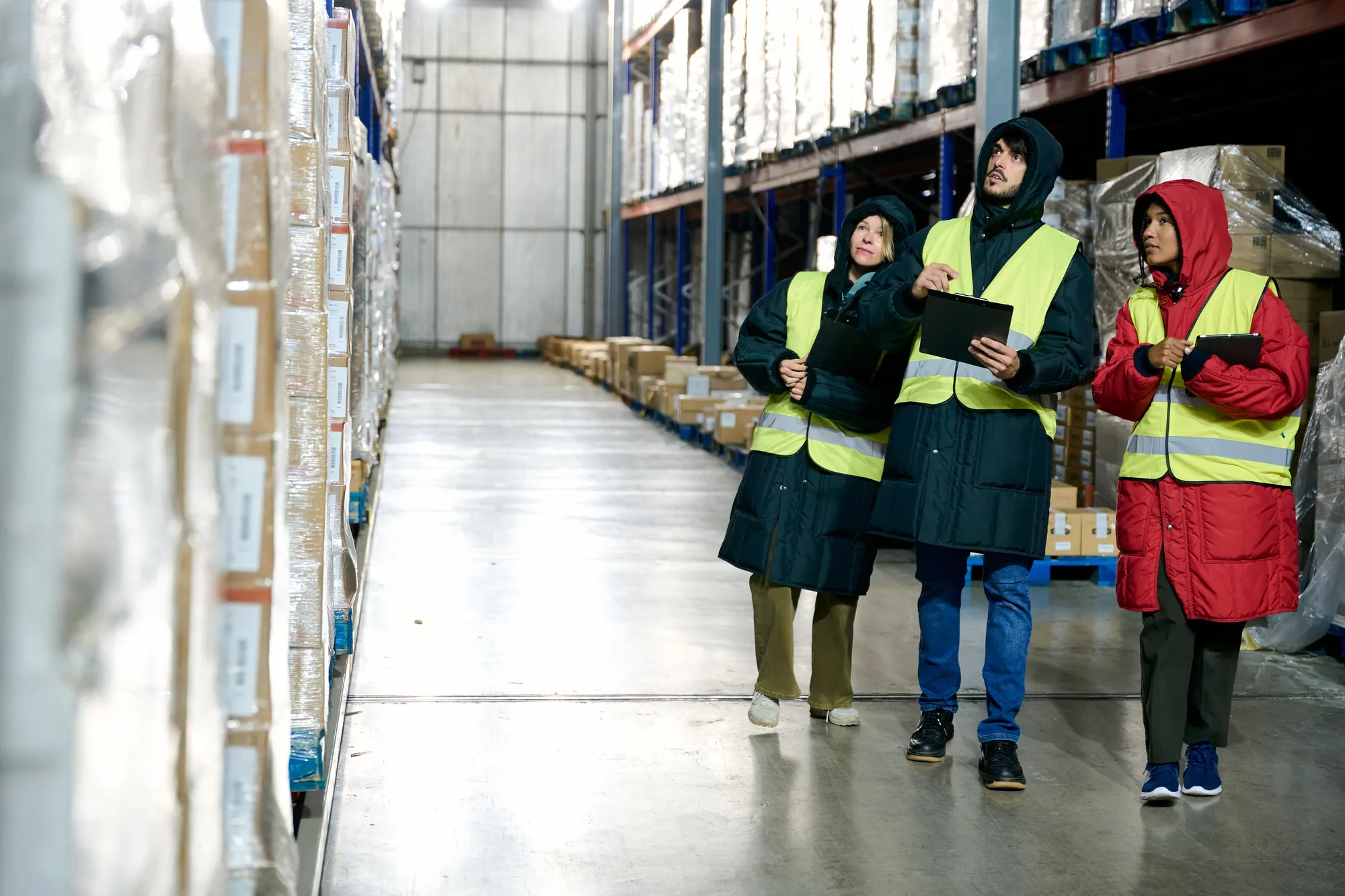
Gebrüder Weiss’s position at the start of the MIXMOVE partnership was unusual compared to other 3M network partners. The Austria hub was already performing the reconstruction process 3M required — approximately two full truckloads daily, more than 2,000 boxes, up to 200 different consignees, all processed and shipped the same day. The operation worked. But it worked because experienced operators made it work, using internal systems and manual coordination that had grown organically around the task.
That model carried three structural problems. First, compliance: 3M required every network partner to run the standardised MIXMOVE process, with the same data structures, KPI reporting, and real-time visibility as DHL and DSV hubs — and the internal Gebrüder Weiss systems could not provide that alignment. Second, transparency: 3M’s network operations team had only limited EDI-based visibility into what was happening inside the Austrian and Hungarian hubs. Third, sustainability of the model itself: a process dependent on individual operator knowledge, rather than system intelligence, is difficult to scale, difficult to audit, and vulnerable to staff change.
The transition also carried a real IT challenge: integrating MIXMOVE HUB OS with both Gebrüder Weiss’s internal infrastructure and 3M’s EDI systems required rigorous testing of all processes, IT structures, and message flows — within a live operation that could not stop.
MIXMOVE HUB OS: from manual reconstruction to intelligent execution
MIXMOVE HUB OS was deployed across Gebrüder Weiss’s Austria and Hungary hubs, connecting to 3M’s systems via EDI integration and replacing manual reconstruction coordination with intelligent, rule-based execution.
On the hub floor, the transformation was direct: twenty operators now use MIXMOVE HUB OS on PDA devices to guide reconstruction and sorting — every box scanned, every movement directed by the system, every action captured digitally. Eight further staff use the platform for administration, rules configuration, settings, and planning, aligning the hub’s operating parameters with 3M’s network standards.
The deployment aligned administration, rules, settings, and planning configurations with 3M’s systems — making the Austria and Hungary hubs fully compliant nodes in 3M’s standardised European network, with the same real-time visibility and KPI reporting as every other MIXMOVE-operated hub. The implementation experience — in particular the need to map physical warehouse processes and IT architecture in full before deployment — became a reference point for subsequent hub rollouts in the 3M network.
Why reconstruction standardisation is the primary result — not one of several
Every result here traces back to one driver. Reconstruction standardisation is what makes the reduction in transport movements, the lower CO₂ emissions, and the real-time visibility for 3M possible. Together, they form a causal chain that shows the full scale of the impact.
Key capabilities deployed
All capabilities listed are deployed and in daily use across the Austria and Hungary hubs.
Implementation & approach
The MIXMOVE HUB OS deployment at Gebrüder Weiss was shaped by the three-party relationship between MIXMOVE, Gebrüder Weiss, and 3M. 3M’s supply chain requirements — the EDI structure, the reconstruction logic, the KPI framework — defined the standards the platform needed to meet. Gebrüder Weiss’s operations team — who already understood the reconstruction process from years of doing it manually — provided the operational expertise that shaped the platform’s configuration. MIXMOVE’s implementation specialists managed integration, testing, and the resolution of the IT network security complexities that the deployment required.
IT and network security were a specific implementation challenge. Integrating MIXMOVE HUB OS with both Gebrüder Weiss’s internal infrastructure and 3M’s EDI systems required rigorous testing of all processes, IT structures, and EDI message flows before go-live. The lesson from the implementation — that physical warehouse processes and IT architecture need to be mapped and tested in full before deployment, not after — is directly applicable for any 3PL considering a similar programme.
The deployment covered Austria first, then Hungary. In Austria, the hubs receive approximately two full truckloads daily — more than 2,000 boxes for up to 200 different consignees — all processed and shipped out the same day. The Hungary hub handles a similar reconstruction model on behalf of 3M’s Central European distribution requirements.
What the deployment has delivered
- Full 3M compliance across Austria and Hungary hubs — Gebrüder Weiss now operates to the same MIXMOVE HUB OS standard as DHL, DSV, and other 3M network partners across EMEA
- 2 full truckloads processed daily at the Austria hub — more than 2,000 boxes for up to 200 different consignees, all sorted, reconstructed, and shipped out the same day
- 28 staff using MIXMOVE HUB OS daily: 20 operators on PDA devices for reconstruction and sorting; 8 on administration, rules, settings, and planning
- Fewer transport movements required for the same volume — through destination-optimised pallet consolidation that replaces the suboptimal architecture of the prior manual model
- Reduced CO₂ emissions — a direct consequence of fewer transport movements, and directly relevant to Gebrüder Weiss’s climate-neutral by 2030 target (customer-stated: not a MIXMOVE-calculated figure)
- Full real-time visibility for 3M across all Gebrüder Weiss hub activity — replacing the limited EDI connections of the prior system with deep, integrated transparency
- Daily KPI overview across all hub tasks — enabling Gebrüder Weiss to monitor performance, identify bottlenecks, and drive continuous improvement on an ongoing basis
Customer voice
We’re making optimum use of the space we have, considerably fewer transport resources are needed, and the reliability of transport and pick-up is far higher than before.
What the deployment proves
The Gebrüder Weiss story makes a point that no other case study in the MIXMOVE portfolio makes as clearly: the transition from manual to intelligent is not just about technology. It is about what intelligent execution reveals. Gebrüder Weiss already understood the reconstruction process — they had been doing it for years. What MIXMOVE HUB OS showed them is what they could not see before: how much unnecessary transport movement was embedded in the manual approach, how much CO₂ was avoidable, and how much performance data was being lost every day because the process had no system to capture it.
That insight has a direct commercial consequence. With daily KPI data and full 3M visibility, Gebrüder Weiss is now in a position to demonstrate performance — to 3M, to other customers, and to its own leadership — in a way that was structurally impossible under the prior manual model. For a company targeting climate neutrality by 2030, every data point on transport reduction and CO₂ avoidance is also a contribution to its own strategic objectives.
The Gebrüder Weiss deployment also sits within a wider network story. Alongside DHL (UK & Ireland), DSV (Germany & Denmark), and other 3M logistics partners, Gebrüder Weiss is part of a multi-3PL network all running MIXMOVE HUB OS to 3M’s standards. That network-level standardisation — the same execution model, the same data structure, the same KPI framework across every hub — is what makes the network legible as one operation.