Deloitte found that 30% of retailers surveyed use AI for supply chain visibility, expected to rise to 41% within a year, with 59% of executives anticipating positive return on investment from supply chain AI initiatives within 12 months.
Adoption is moving faster than assessment. What follows is where AI genuinely changes a logistics decision, where it does not, and the precondition that determines which of the two an operation experiences.
What AI does in a logistics system
In logistics software, AI refers to models that identify patterns in operational data and produce a prediction or a recommendation from them. Demand forecasts, arrival time estimates, route sequencing, and exception prediction are the common applications.
MIXMOVE frames the distinction that matters commercially. A model produces a probability. An operation needs an instruction. Converting one into the other requires knowing the current state of the network, the commitments already made, and the constraints in force, none of which the model supplies. Prediction improves a decision. It does not make one.
How logistics arrived at this point
Logistics planning ran for decades on scheduled optimisation. A plan was produced overnight, executed during the day, and reviewed afterwards. The gap between plan and reality was absorbed by buffers.
Two things changed. Data capture moved from periodic to continuous, which produced a volume of operational data no planning cycle could use. At the same time, buffers were removed for cost reasons, which meant the gap between plan and reality had nowhere to go. Prediction became attractive precisely because the slack that used to cover the error had been taken out.
Why adoption is accelerating now
Cost pressure has made planning error visible. Deloitte found that 66% of retail executives surveyed plan to restructure their supply chains if input costs rise, which introduces new lanes and suppliers into networks with little tolerance for forecast error.
Complexity has outgrown manual planning. More destinations, smaller consignments, and shorter windows produce more combinations than a planning team can evaluate in the time available.
Compliance has raised the value of accurate operational records. Under CSRD, transport emissions require traceable activity data, which means the same record that supports reporting can also train a model.
The precondition most projects skip
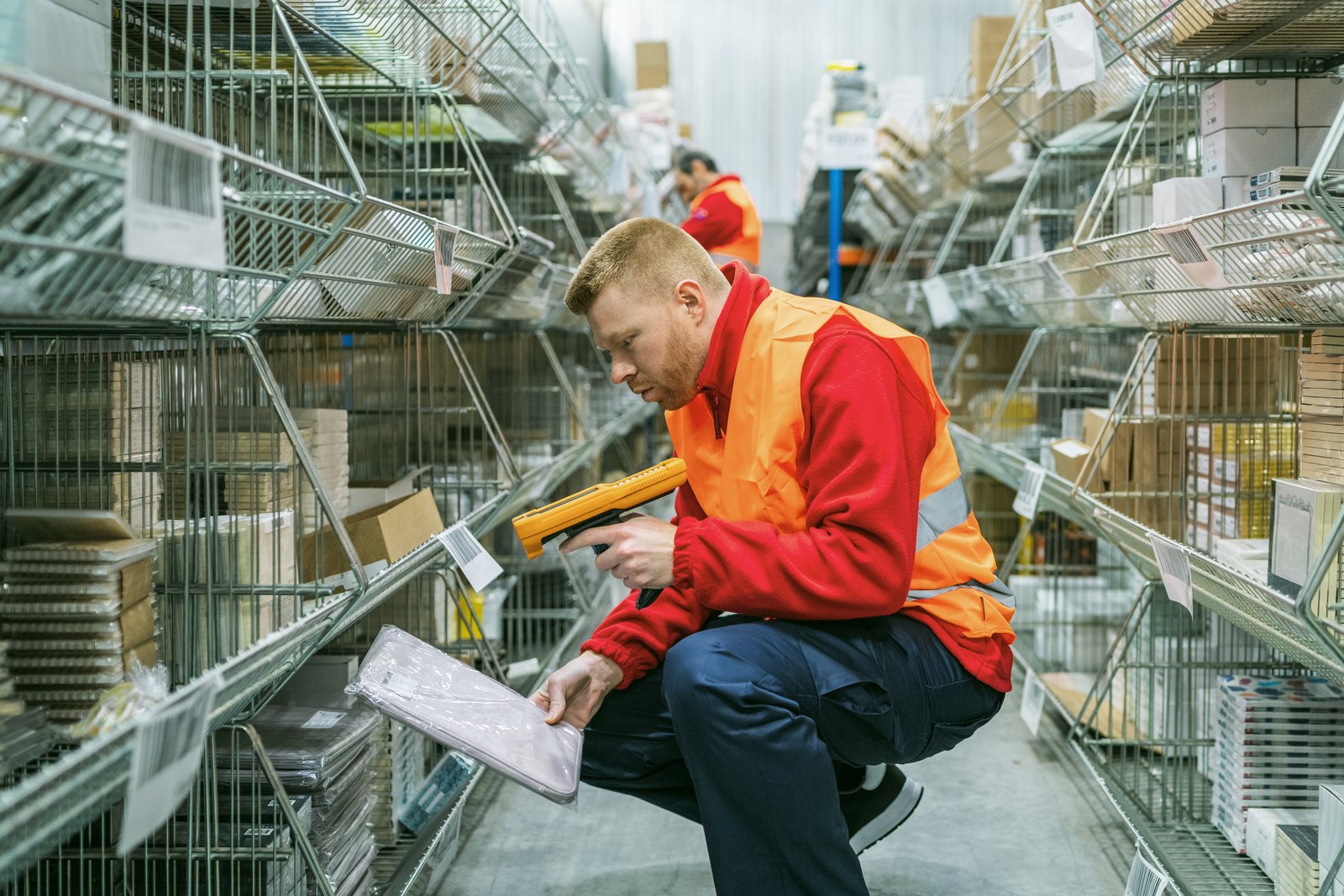
A model is only as good as the record it learns from, and most logistics data describes what was planned rather than what happened.
Planned departure times, planned load compositions, planned arrival windows. Where the actual event was never captured at the point it occurred, the model learns the intention rather than the outcome, and predicts a network that does not exist.
McKinsey research into mid-mile and last-mile handovers found that waste created at blind handoffs between shippers, dispatchers, third-party logistics providers, and carriers accounts for between 6% and 13% of carrier revenue. Handoffs are precisely where the actual record is lost, which means the most expensive part of the network is also the least well described in the training data.
Five places AI changes a logistics decision
Arrival time estimation. Predicting realistic arrival from live conditions rather than from scheduled duration. The gain is narrower delivery windows rather than faster journeys.
Demand forecasting at local level. Network-level forecasting has been available for years. Forecasting per site or per neighbourhood is the harder problem and the one that determines whether a lean network works.
Route sequencing under constraint. Evaluating far more sequencing combinations than a planner can, given access, capacity, and window constraints.
Exception prediction. Identifying which consignments are likely to fail before they do, which converts a reactive recovery into a planned intervention.
Anomaly detection in operational data. Surfacing patterns that indicate a developing problem, such as a lane whose dwell is creeping up, well before it appears in a monthly report.
Four things AI does not solve
Missing execution data. No model recovers information that was never captured. This is the most common cause of disappointing results.
Decision authority. A recommendation still requires something to act on it. Where the recommendation reaches a screen nobody watches, nothing changes.
Physical constraints. A model cannot create dock capacity, vehicles, or staff. It can allocate what exists more effectively and no more.
Accountability. A prediction that turns out wrong still requires somebody to own the consequence. Where a model is treated as authority rather than as input, that ownership becomes unclear at exactly the wrong moment.
The three layers of a working deployment
Execution. Capturing what physically happened at item level, as it happens.
Orchestration. Converting predictions into instructions that reach the point of work, against current network state and existing commitments.
Intelligence. Measuring whether the prediction held, and feeding the result back.
Most deployments begin at the third layer, which is why the results frequently disappoint. Without the first, there is nothing reliable to learn from. Without the second, there is nothing to act on what was learned.
What the evidence shows
Deloitte reports that 30% of retailers surveyed use AI for supply chain visibility, expected to reach 41% within a year, with 59% anticipating positive return on investment within 12 months.
McKinsey attributes between 6% and 13% of carrier revenue to waste at handover points, with dwell time named as a leading driver.
Across MIXMOVE deployments, hub operations have recorded up to 130% higher warehouse hub throughput, up to 80% fewer errors, up to 50% less warehouse space, and up to 58% labour cost savings. Dwell time reductions of 40% and fill rate improvements of 10% to 20% have been recorded. The platform is in use across 35+ distribution companies in 20+ countries.
At 3M, a decade of collaboration produced a 90% truck fill rate, a 35% reduction in transport costs, and a 50% reduction in CO₂ emissions.
“By using the MIXMOVE software, 3M managed to reduce transport costs by 35% and CO₂ emissions by 50%.”
— Patrick Van De Vyver, Former Head of EMEA Logistics Operations, 3M
How MIXMOVE builds the record models depend on
MIXMOVE HUB OS captures the layer most logistics data is missing. Freight is identified at item level as it physically arrives, matched against live outbound commitments, and the resulting movement is recorded as it occurs rather than reconstructed from plans afterwards.
That record describes what happened rather than what was intended, which is the difference between a model that reflects the network and one that reflects the planning assumption.
The same layer closes the second gap. Instructions reach the point of work while the freight is still on the dock, so a recommendation becomes an action rather than a dashboard entry.
MIXMOVE HUB OS operates alongside an existing TMS, WMS, or ERP as an orchestration layer, or as a standalone platform.
MIXMOVE DI structures the captured record for network-level analysis, including dwell, utilisation, and service performance, alongside Scope 3 transport reporting built to ISO 14083 methodology.
Prediction is only as good as the record beneath it. Most logistics records describe intentions. Operations that capture execution get models worth acting on.
Read the MIXMOVE DI overview to see how execution data is structured for network-level analysis.
Frequently asked questions
What is AI used for in logistics?
Arrival time estimation, demand forecasting at site level, route sequencing under constraint, exception prediction, and anomaly detection in operational data. Each produces a prediction that improves a decision rather than making one.
What are the benefits of AI in logistics software?
Narrower delivery windows, better local forecasting, more effective allocation of existing capacity, and earlier identification of consignments likely to fail. The gains come from allocating resources more effectively rather than from creating new capacity.
What are the limitations of AI in logistics?
It cannot recover execution data that was never captured, cannot act without a mechanism that delivers instructions to the point of work, cannot create physical capacity, and does not remove the need for human accountability.
What data does logistics AI need to work?
Records of what physically happened, captured at item level at the moment of the event. Plan data describes intention rather than outcome, and models trained on it predict a network that does not exist.