More than half of warehouse operations are expected to increase investment in automation over the next decade, according to Terminal Industries' research into yard and facility operations, with computer vision named as one of the most practical AI applications in logistics for trailer identification, gate automation and facility monitoring. Yet the yard remains one of the least automated parts of the supply chain, and most explanation of what computer vision in this context actually does stays at the level of patent filings and academic papers rather than plain-language buyer education.
This piece is that plain-language explanation: what computer vision does in a yard or dock setting, why it is gaining attention now, and how it fits alongside the orchestration and visibility systems that already coordinate yard activity.
What Computer Vision Does in a Yard or Dock Setting
Computer vision uses cameras and image-recognition software to automatically identify and track physical objects, trailers, containers, license plates, dock doors, without requiring a person to observe and record what they see. In a yard, that typically means automatically recognising which trailer has arrived at a gate, confirming it is in the correct location, or detecting whether a dock door is occupied, replacing a manual check that would otherwise require someone to walk the yard or review camera footage themselves.
It is worth distinguishing this from the broader, looser use of "AI" in logistics marketing. Computer vision, in this context, is a specific, well-bounded application: recognising defined visual patterns, a license plate, a trailer silhouette, an open versus closed dock door, rather than a general reasoning capability applied loosely across the operation. That narrowness is part of why it works reliably: the task it automates is visually consistent and repetitive, which is exactly the condition under which image-recognition models perform well.
Why Now
Image-recognition technology has become accurate and affordable enough, over the past several years, to apply to specific, well-defined tasks like trailer and license plate identification, rather than remaining a research-stage capability. At the same time, yard operations are under growing pressure to reduce the manual coordination overhead described elsewhere in this content category, which makes a technology that can automate a narrow, well-defined visual recognition task immediately useful.
The Structural Problem: Manual Visual Checks Don't Scale
A gate guard or yard jockey confirming a trailer's identity, or a dock supervisor checking whether a door is occupied, is doing a visual recognition task manually, one that is simple for a person to do once but time-consuming and error-prone to do consistently across dozens of trailers and gate movements a day. The task does not require judgement so much as consistent, accurate observation, which is exactly the kind of task computer vision is suited to automate.
The error pattern that results from manual visual checks is predictable: accuracy degrades with volume and fatigue, not because the person doing the check lacks skill, but because sustained, repetitive visual attention is genuinely difficult to maintain across a long shift. A facility running a high volume of gate movements in a short window is precisely where this kind of manual check is most likely to miss something, and precisely where an automated recognition system has the most to offer.
Five Things Computer Vision Actually Does at the Dock
- Trailer and license plate identification at the gate. Cameras automatically read identifying information as a trailer arrives, rather than requiring a manual check-in.
- Dock door occupancy detection. Cameras confirm whether a door is occupied or free, feeding that status into scheduling without a manual walk-through.
- Damage and condition monitoring. Image recognition can flag visible damage to a trailer or its contents at key checkpoints, creating a visual record rather than relying on memory.
- Safety and compliance monitoring. Cameras can flag unsafe conditions in the yard, such as a trailer parked outside a designated zone, without requiring continuous human observation.
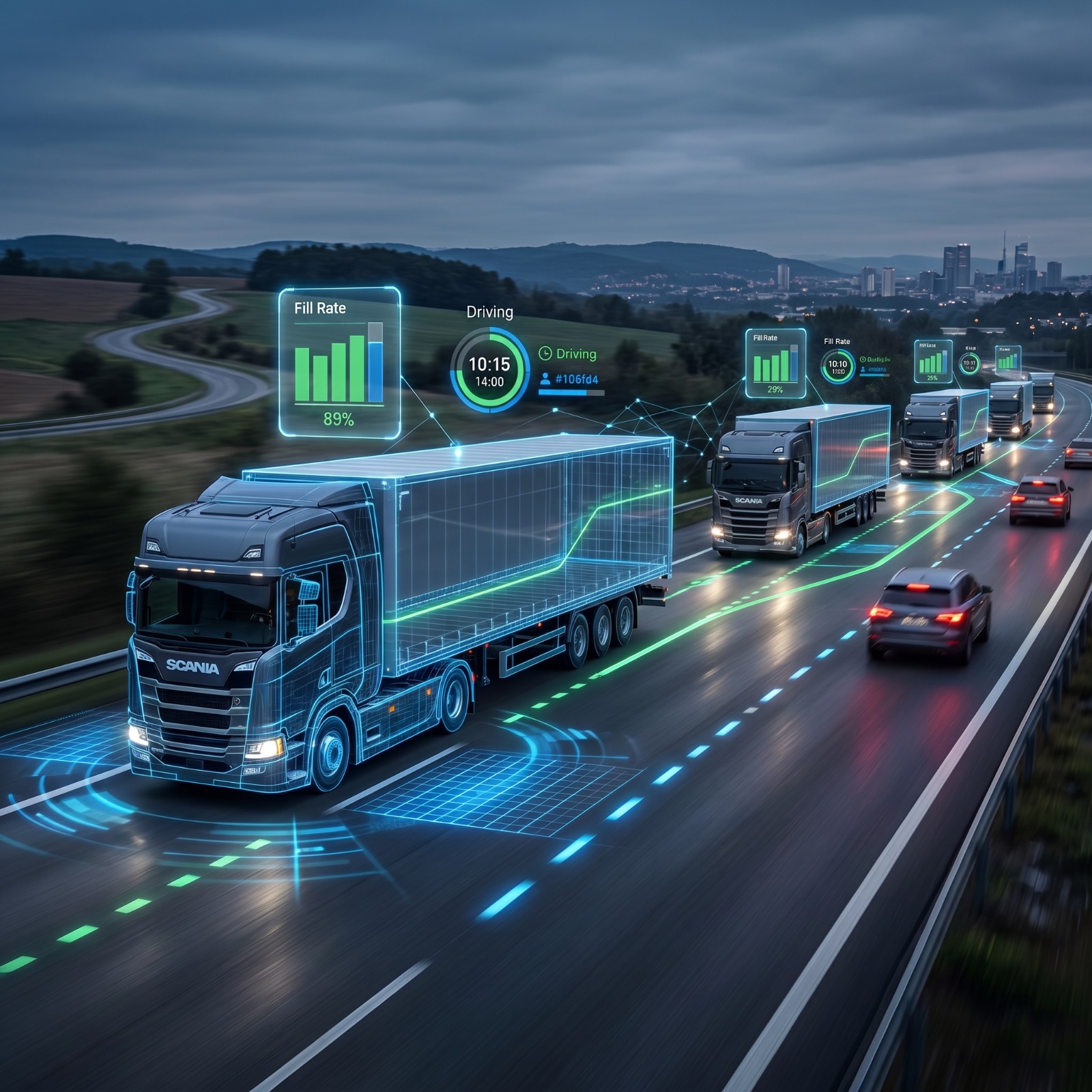
- Feeding structured data into yard and hub systems. The recognition output, a trailer ID, a door status, a timestamp, becomes structured data that a yard or orchestration system can act on, rather than staying locked in camera footage no one reviews in real time.
How MIXMOVE Fits Alongside Computer Vision Systems
MIXMOVE is an Intelligent Logistics Orchestration Platform. MIXMOVE HUB OS gives hub operators real-time visibility and execution control over dock, yard and gate activity, and is built to receive and act on structured data from the systems that capture it, including computer-vision-based trailer and gate recognition where a facility has deployed it. MIXMOVE operates as an orchestration layer above existing yard, warehouse and transport systems, connecting through REST API, EDI, eFTI and webhooks, or as a standalone platform, rather than providing camera hardware or image-recognition capability itself.
Computer Vision Automates Recognition; Orchestration Acts on It
Computer vision solves a specific, narrow problem well: recognising what is physically present in the yard without a person having to observe and record it manually. What happens with that information, how it feeds scheduling, dwell-time tracking and detention risk, is a separate orchestration question, and the two capabilities work best when they are connected rather than treated as the same thing.
A facility considering computer vision for the first time is often better served by starting with the orchestration question rather than the recognition question: what decisions would actually change if gate and dock status were known automatically and instantly. If the answer is that dwell time would be flagged sooner, or that detention risk would surface before it becomes a billing dispute, the orchestration layer that consumes that data is doing at least as much of the operational work as the cameras that capture it.
See how MIXMOVE orchestrates yard and hub data, including data from computer-vision systems. Request an Operations Review.
Frequently Asked Questions
Does MIXMOVE provide computer vision or camera hardware?
No. MIXMOVE provides hub and yard orchestration and execution control, and is built to receive structured data from systems that capture it, including computer-vision-based recognition where a facility has deployed it. Camera hardware and image-recognition capability are not MIXMOVE features.
What does computer vision actually automate at a dock?
It automates visual recognition tasks that would otherwise require manual observation: trailer and license plate identification, dock door occupancy, and visible damage or safety condition monitoring.
Is computer vision widely adopted in yard operations today?
Adoption is still early. The yard is described as one of the least automated parts of the supply chain, though computer vision is named as one of the more practical and immediately usable AI applications in logistics.
How does computer vision data become useful for yard operations?
The recognition output becomes structured data, a trailer ID, a door status, a timestamp, that a yard or orchestration system can act on, rather than staying locked in camera footage no one reviews in real time.