McKinsey research into mid-mile and last-mile handovers found that waste created at blind handoffs between shippers, dispatchers, third-party logistics providers, and carriers accounts for between 6% and 13% of carrier revenue, with dwell time identified as a primary driver.
The word blind is doing the work in that sentence. Most networks have extensive visibility and remain blind at exactly the points where the cost occurs. What follows is why that happens, and what end-to-end visibility requires beyond broader coverage.
What end-to-end visibility means
End-to-end supply chain visibility is a continuous, traceable record of what happened to goods across every stage of their journey, including the transfers between stages.
The word continuous carries the definition. Visibility with gaps is not end-to-end visibility with a few missing pieces. It is a series of separate views, and a network cannot be managed from views that do not join up.
MIXMOVE frames the distinction that determines whether a programme delivers. Most visibility investment describes movements. The cost sits in the transfers between movements, which is precisely where the description stops.
Why visibility programmes stall at partial coverage
Coverage grows by adding sources. A telematics feed covers the vehicles. A warehouse system covers the stored inventory. A carrier portal covers the linehaul.
Each addition genuinely improves the picture and none of them covers the handover, because a handover belongs to neither party at the moment it occurs. The unit has left one system’s scope and not yet entered the next.
Programmes measure their progress by how many sources are connected, which makes coverage look near complete while the gaps stay exactly where they were.
The three gaps that break the chain
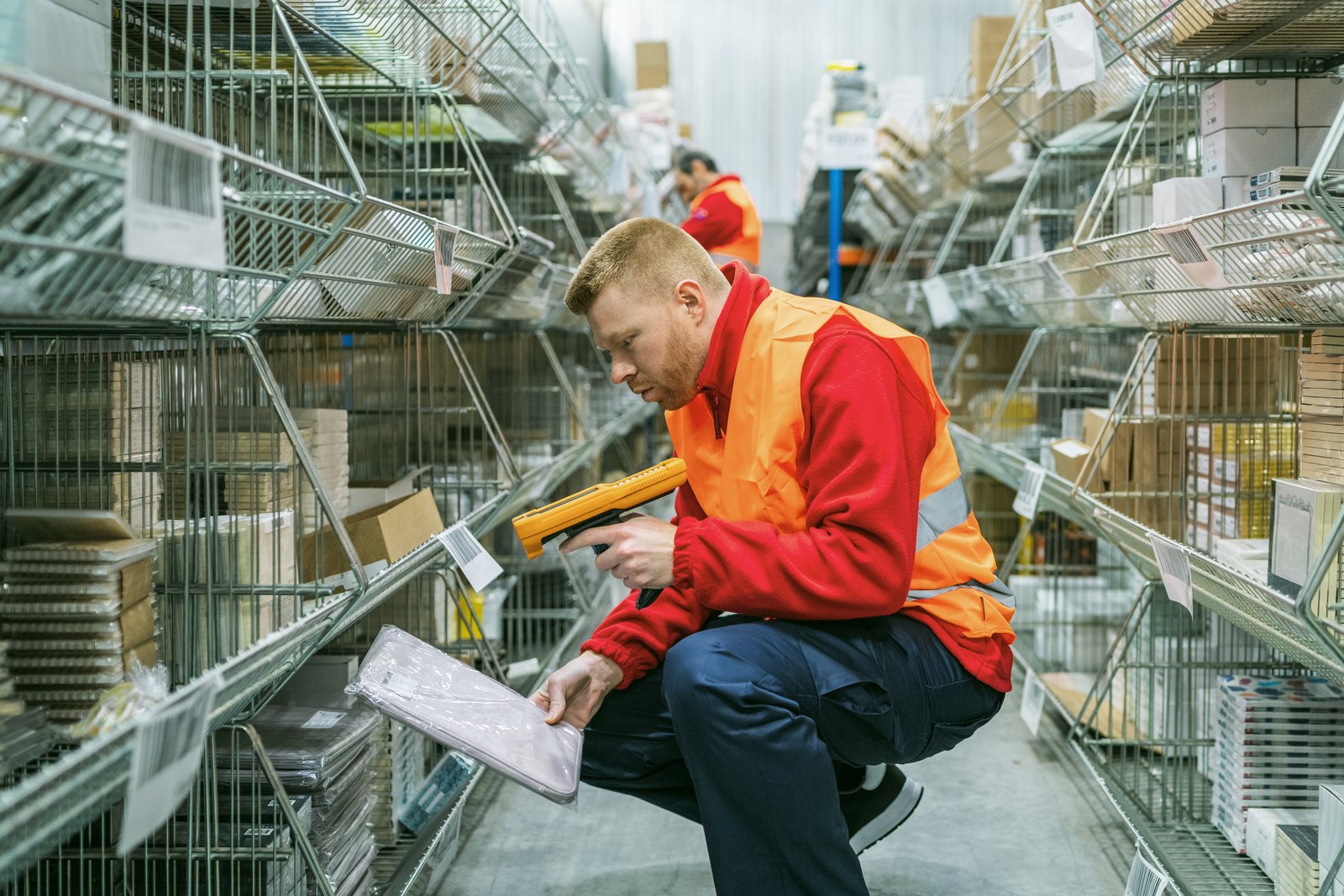
The receiving gap. Between a vehicle arriving and its contents being recorded. The unit exists physically and not yet in any system, so nothing downstream can plan against it.
The sortation gap. Between a unit being recorded and its onward allocation being decided. This is usually the longest gap and the least measured, and it is where consolidation opportunities expire.
The load gap. Between allocation and departure confirmation. Where this is not captured at unit level, the network knows a vehicle left without knowing precisely what was on it.
All three are dock events. A network can have complete visibility of every vehicle in motion and none of these three.
Why the gaps matter more than the coverage
The gaps are where the decisions happen.
A unit in transit is committed. Its destination, its vehicle, and its arrival are all fixed, and the visibility describing it is accurate and largely unactionable. A unit sitting in the sortation gap is the opposite. Nothing about its future is fixed, everything is still changeable, and it is invisible.
That is the inversion worth noticing. Networks describe the part they cannot change in high detail and the part they can change not at all.
The four properties of usable visibility
Item-level granularity. Consignment records cannot support reallocation, completeness checking, or unit-level audit. The record must exist at the level decisions are made.
Event capture at the moment of the event. A record created later is a reconstruction. It carries the errors of memory and paperwork, and it cannot support a decision that has already passed.
Continuity across parties. The record must survive the handover between organisations, which requires the transfer itself to be an event rather than a boundary.
Actionability. Visibility that reaches a dashboard and not the dock changes what is known without changing what happens.
What visibility is now required to prove
The purpose has shifted. Visibility used to answer where something is. It is now required to demonstrate what occurred.
Under CSRD, transport emissions must be traceable to underlying activity data, meaning what moved, at what utilisation, over what distance. Under ETS2, road transport fuel carries a direct cost that has to be attributed. In regulated handling, including temperature-controlled pharmaceutical distribution, an unbroken record traceable to individual units is the evidence that the product is usable.
Position history does not meet any of those requirements. It confirms a vehicle was somewhere without confirming what it was carrying or how full it was.
What the evidence shows
McKinsey attributes between 6% and 13% of carrier revenue to waste at handover points, with dwell time named as a leading driver.
Deloitte reports that 30% of retailers surveyed use AI for supply chain visibility, expected to reach 41% within a year, with 59% anticipating positive return on investment within 12 months.
The European Environment Agency identifies road freight as one of the fastest-growing sources of transport emissions, driven by rising delivery volumes and low vehicle utilisation.
Across MIXMOVE deployments, hub operations have recorded up to 80% fewer errors, dwell time reductions of 40%, fill rate improvements of 10% to 20%, and up to 130% higher warehouse hub throughput. The platform is in use across 35+ distribution companies in 20+ countries.
At 3M, a decade of collaboration produced a 90% truck fill rate, a 35% reduction in transport costs, and a 50% reduction in CO₂ emissions.
“By using the MIXMOVE software, 3M managed to reduce transport costs by 35% and CO₂ emissions by 50%.”
— Patrick Van De Vyver, Former Head of EMEA Logistics Operations, 3M
How MIXMOVE closes the transfer gap
MIXMOVE HUB OS captures the three dock gaps directly. Freight is identified at item level as it physically arrives, which closes the receiving gap at the point it opens. The onward commitment is matched immediately, which collapses the sortation gap rather than measuring it. Load confirmation is recorded at unit level, so what departed is known precisely rather than inferred.
Scanning is the mechanism that creates this record, not something the system removes. What changes is that the scan produces an allocation decision at the same moment, instead of producing a data point that somebody interprets later.
Errors fall as a result, and recorded reductions of up to 80% reflect that. A mis-sorted unit is usually a unit whose destination was not known at the moment somebody had to move it, which is an information gap rather than an individual failing.
MIXMOVE HUB OS operates alongside an existing TMS, WMS, or ERP as an orchestration layer, or as a standalone platform.
MIXMOVE DI structures the continuous record for network-level reporting and audit, with each movement traceable to an individual unit, alongside Scope 3 transport reporting built to ISO 14083 methodology.
Coverage is not continuity. A network that sees every vehicle and no handover has described the part it cannot change. Operations that capture the transfers can act on them and prove them.
Read the MIXMOVE DI overview to see how a continuous execution record supports network reporting and audit.
Frequently asked questions
What is end-to-end supply chain visibility?
A continuous, traceable record of what happened to goods across every stage of their journey, including the transfers between stages. Visibility containing gaps is a series of separate views rather than an end-to-end record.
Where do most visibility programmes have gaps?
At the handovers. The receiving gap between arrival and recording, the sortation gap between recording and onward allocation, and the load gap between allocation and departure confirmation. All three are dock events.
What does usable visibility require?
Item-level granularity, event capture at the moment of the event rather than reconstruction afterwards, continuity across organisational boundaries, and delivery to the point of work rather than to a dashboard.
Can visibility data be used for compliance reporting?
Only if it records activity rather than position. CSRD requires transport emissions traceable to what moved, at what utilisation, over what distance. Position history alone does not satisfy that requirement.