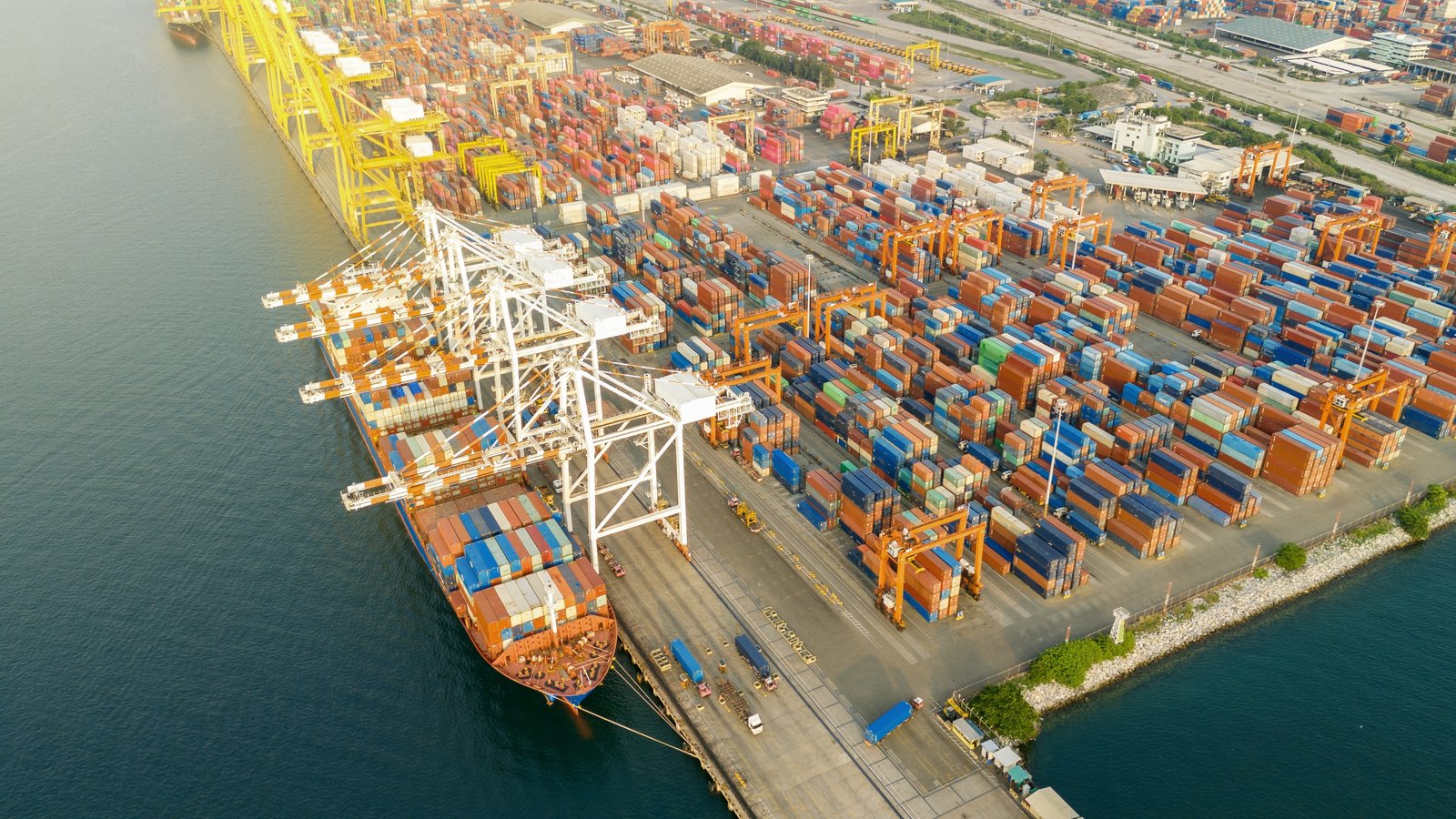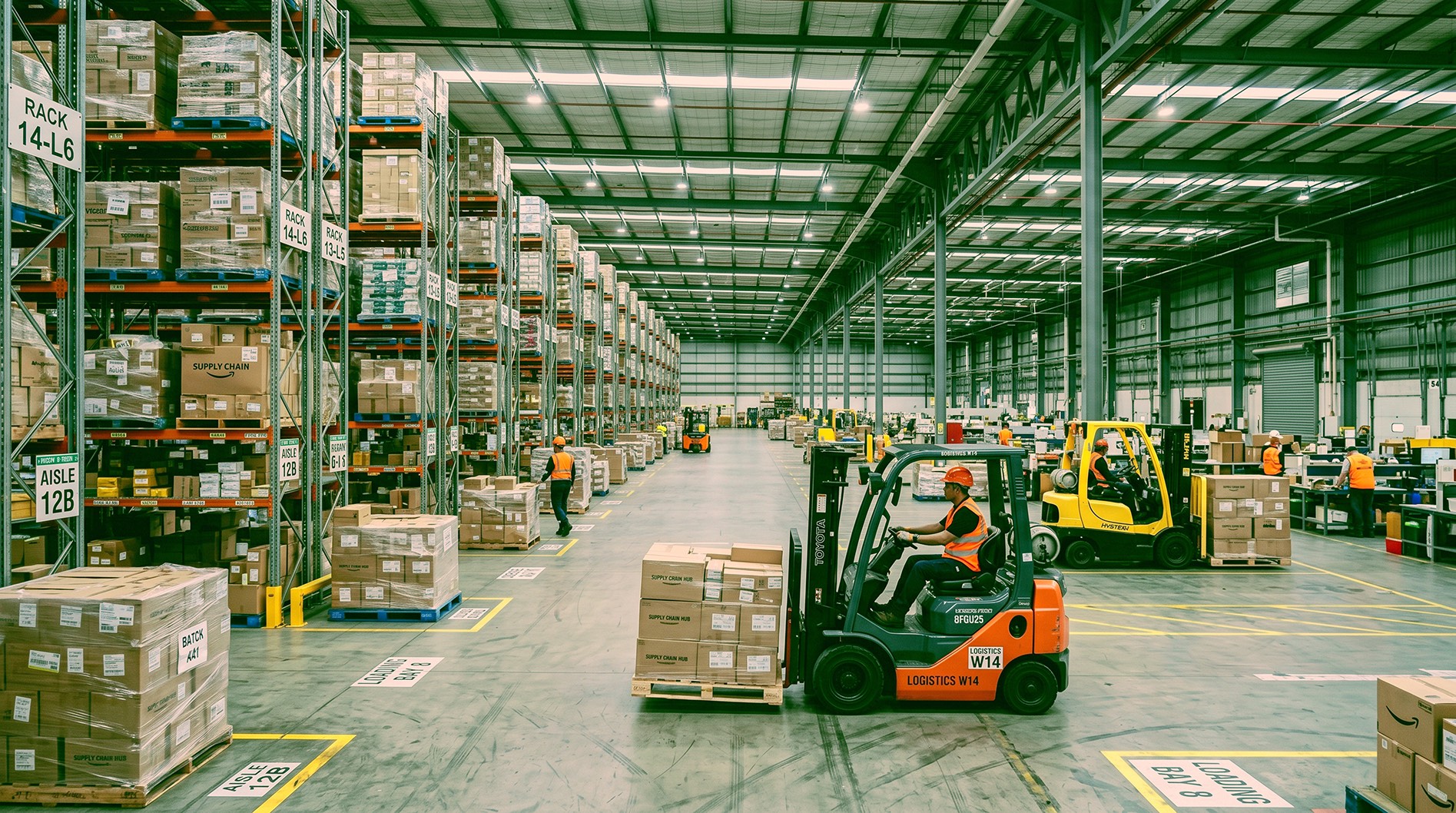
Storage absorbs the mismatch between inbound arrivals and outbound plans. Remove storage and the coordination problem has nowhere to hide. Cross-docking integration succeeds or fails on timing, and timing is a data problem rather than a facility problem.
In 2024, more than one-fifth of the distance travelled by road freight vehicles in the EU (21.6%) was covered by empty vehicles, according to Eurostat. Every one of those kilometres was fuelled, staffed, insured, and reported. None of them carried revenue.
Cross-docking exists to close that gap. It moves freight from inbound to outbound without an intermediate storage step, consolidating part loads into fuller ones and breaking bulk into destination-ready units. The mechanics are simple. The coordination is not. Cross-docking integration succeeds or fails on whether a hub can hold timing across inbound arrivals, floor activity, and outbound dispatch when volumes shift mid-shift. That timing problem is the lens through which to view the two models, the benefits they produce, and the integration steps that determine whether the model holds at volume.
What Cross-Docking Actually Is
Maersk defines cross-docking as a logistics process in which products from suppliers or manufacturers transfer directly to the customer with minimal or no storage time in between, eliminating the traditional storage phase. Goods arrive, are sorted into consignments by destination, and depart on outbound vehicles, usually within hours.
MIXMOVE frames it more precisely. A cross-dock is the point at which physical execution and network planning must align in real time. In a conventional warehouse, storage absorbs the disagreement between the two. A late inbound sits on a rack until the outbound plan catches up. Cross-docking deliberately removes that buffer, which means the coordination has nowhere to hide. The facility is not the variable. The decision speed is. That is why timing, not storage, is the test.
Where the Practice Came From
Cross-docking is not new. It was pioneered in less-than-truckload trucking in the 1930s, adopted for military distribution in the 1950s, and brought into retail networks in the late 1980s. For most of that history, the binding constraint was physical: dock doors, handling equipment, labour on shift, and vehicle scheduling by telephone.
What changed is the data layer. Scan events, electronic data interchange, and then open APIs and event streaming made it possible to know the state of a hub while the shift is running rather than after it closes. Cross-docking stopped being a question of what a building can do and became a question of what an operation can know in time to act on it. That convergence is the reason the practice is expanding beyond its original home in freight consolidation and into shipper and manufacturer networks.
Why the Pressure Is Structural, Not Cyclical
Three forces are pushing hubs towards cross-docking, and none of them is a market cycle.
Delivery expectations have reset the network design. McKinsey describes large, centrally located distribution centres as built to ship products at set intervals to stores, and notes that today’s customers require greater agility and speed than central distribution centres are set up to deliver on their own. The same analysis shows e-commerce penetration is 30% higher than pre-pandemic levels and notes that quick commerce operators offer delivery within 20 minutes. Networks built for weekly replenishment cannot absorb daily replenishment without a faster node in the middle.
Labour has become the scarce input, not space. Hub operations compete for the same shift coverage as every other facility in their catchment. Overtime, agency cover, and the ramp time before a new starter reaches full productivity all sit on the cost line. Cross-docking reduces touches per unit, which is the only labour lever that does not depend on hiring.
Regulation has made consolidation a reportable metric. The European Environment Agency notes that the ETS2 system is expected to incentivise a shift towards cleaner logistics solutions for road freight and to discourage reliance on conventional fuels. Under CSRD, Scope 3 transport emissions require documentation rather than estimation. Fill rate ceases to be an internal efficiency metric and becomes a disclosed number. That shift makes consolidation decisions on the hub floor carry a compliance consequence.
The Gap Existing Systems Cannot Close
Most operations attempting cross-docking already own the software they believe should support it. That is the problem. The issue is not missing tools. It is the lack of a system capable of deciding what happens in time. This is why integration, not procurement, determines whether cross-docking works.
Supply Chain Management Review reported in April 2026 that the execution gap is now the industry’s biggest challenge, with companies having invested heavily in visibility and digital tools while still struggling to translate insights into measurable operational outcomes. The publication identifies the mechanism directly: visibility without ownership leads to inaction; signals are identified but not acted on because decision ownership is unclear. Advanced systems go underutilised as teams revert to manual workflows. Supply Chain Digital reported in February 2026 that BCG finds most organisations unable to report meaningful returns on heavy investment in supply chain AI, and that such investment does not close the gap when the operating model is weak.
The structural reason is division of labour between system categories. A warehouse management system governs inventory inside four walls and is built around putaway and picking, activities a cross-dock is designed to eliminate. A transport management system governs movement between locations and optimises plans before the freight arrives. Visibility platforms observe and report. Each does its job. None of them decides what happens to a specific pallet on a specific lane in the next eleven minutes.
That decision window is where cross-docking margin is won or lost. Legacy enterprise resource planning systems handle compliance but not real-time execution. Visibility platforms observe but cannot act. No single system connects physical execution to network-level decisions and compliance documentation within a single data flow. That is the gap, and it is the reason integration must be built around timing. Timing is the thesis and the constraint.
Two Models, Three Flow Patterns
Cross-docking divides into two models, distinguished by when the destination is fixed.
Pre-distribution cross-docking fixes the final destination before the goods reach the hub. Sorting follows predetermined instructions. Dwell is shortest, and handling is lowest, but the model depends on outbound channels being settled in advance and on inbound reliability that holds without a buffer.
Post-distribution cross-docking allocates at the hub, based on demand signals at the time of arrival. It buys flexibility during peak periods and amid demand volatility. It also requires accurate stock position at unit level, because the allocation decision is made against live information rather than a plan.
Three flow patterns run inside both models.
Continuous flow moves units straight through with no intermediate staging.
Consolidation combines part loads from several inbound sources into fuller outbound loads.
Deconsolidation breaks bulk inbound into destination-ready units for onward distribution.
Most hubs run all three concurrently on different lanes, which is precisely why static rules fail.
The Benefits, and What They Depend On
Cross-docking produces four operational benefits. Each one is conditional, and the condition is the part most implementations underestimate.
Lower storage cost. Removing the storage phase eliminates the space, racking, utilities, and inventory handling associated with it. MIXMOVE deployments have required up to 50% less warehouse space. The condition is dock and staging capacity. Space saved on storage is partly reinvested in doors and floor area, so the net gain depends on facility configuration rather than on the model itself.
Higher fill rate and lower transport cost. Consolidating part loads into fuller outbound loads is the mechanism that directly attacks empty running. The 3M EMEA operation reached a 90% truck fill rate alongside a 35% reduction in transport costs. The condition is destination density. Consolidation only works where enough volume shares an outbound direction within the same time window.
Fewer touches per unit. Freight that moves from inbound to outbound without putaway and picking is handled once rather than three times. MIXMOVE deployments have recorded up to 80% fewer errors and up to 58% labour cost savings. The condition is identification accuracy at unit level. Fewer touches only reduce errors where each touch is captured as an event.
Faster transit and higher throughput. Units that do not wait for a picking cycle leave the hub in hours rather than days. MIXMOVE deployments have recorded up to +130% warehouse hub throughput and up to 15% more billable output. The condition is inbound reliability, which is covered in the readiness assessment below.
The pattern across all four is consistent. The benefit is available to any hub that can hold timing. None of it is available to a hub that cannot provide it.
How Cross-Docking Integration Works in Five Steps
- See what is arriving. Inbound shipment data reaches the hub before the freight does. Capacity, lane allocation, and shift resources are prepared based on expected arrivals rather than actual arrivals. Earlier sight of an inbound delay is the difference between reallocating a lane and absorbing a missed outbound.
- Capture events as freight is unloaded. Each unload generates an operational event tied to the wider flow. The hub knows what has physically arrived, what is still outstanding, and where each unit needs to go next. Without event capture at this step, every later decision runs on assumption.
- Sort and consolidate. Shipments are grouped by destination, outbound flow, transport plan, or handling priority. Consolidation at the right level, whether by destination, hub, or final address, is what lifts fill rate and strips out handling that adds no value.
- Assign lanes and outbound flow. Freight is directed to the lane, staging position, or outbound movement that matches live volume and availability. Static allocation set at shift start cannot hold when volumes move during the day. Dynamic assignment keeps the floor aligned with actual flow.
- Dispatch with visibility. Outbound loading and dispatch connect back to transport and partner workflows. Documentation and labelling are generated from the same event record, which makes the outbound movement auditable rather than merely completed.
The five steps are sequential in execution and simultaneous in operation. At any given moment, a hub is receiving, sorting, allocating, and dispatching simultaneously. Coordination means that all four states share a single view.
Assessing Whether an Operation Is Ready
Cross-docking is not a universal fit. Five conditions determine whether integration will hold.
Product profile. High-demand items with predictable volume and low handling requirements cross-dock well. Slow-moving stock with unpredictable order patterns does not, because there is no buffer to absorb the variance.
Inbound reliability. Cross-docking without storage transfers all schedule risk to the outbound side. Inbound arrival accuracy is the single strongest predictor of whether a cross-dock holds its dispatch commitments.
Data quality at unit level. Coordination runs on events, and events run on identification. If a hub cannot reliably identify what arrived at the unit or parcel level, no orchestration layer will fix the resulting ambiguity.
Dock and floor capacity. Cross-docking trades storage space for door capacity and staging area. A facility with deep racking and few doors is configured for the wrong operation.
Partner readiness. Suppliers, carriers, and receiving sites all sit inside the timing envelope. Integration that stops at the hub boundary leaves the hardest coordination unsolved.
What the Evidence Shows
Third-party evidence on the value of connected execution is consistent. BCG has found that leaders in digital supply chain operate with more than 40% higher operating margins and at least 20% lower working capital. McKinsey’s account of the shift from slow-twitch to fast-twitch fulfilment models points in the same direction: networks that can serve customers rapidly are rebuilding around faster nodes rather than larger ones.
MIXMOVE results across cross-dock and hub operations are consistent with that pattern, and are set out by benefit above. The platform is used by 35 or more distribution companies operating in 20 or more countries. The longest-running reference is 3M in EMEA, a collaboration spanning 10 years, over which the operation recorded a 35% reduction in transport costs, a 50% reduction in CO₂ emissions, and a 90% truck fill rate.
"By using the MIXMOVE software, 3M managed to reduce transport costs by 35% and CO₂ emissions by 50%."
— Patrick Van De Vyver, Former Head of EMEA Logistics Operations, 3M
How MIXMOVE Approaches Cross-Docking
MIXMOVE is an Intelligent Logistics Orchestration Platform. It connects physical execution to audit-grade compliance and network-level decisions, built into the data flow rather than bolted on afterwards.
Cross-docking is delivered through MIXMOVE HUB OS, the execution layer: maximum throughput, from node to network. MIXMOVE HUB OS coordinates inbound visibility, event capture on unload, parcel-level consolidation, dynamic lane and space assignment, mobile task guidance for floor teams, and outbound dispatch in one live view. Hub managers see inbound progress, lane occupation, and outbound readiness together, with exceptions surfaced while the correction window is still open rather than after the shift closes.
MIXMOVE DI carries the compliance layer. Network intelligence, audit-proof. MIXMOVE DI produces Scope 3 reporting structured according to the ISO 14083 methodology and supports CSRD and ETS2 reporting obligations from the same execution events that drive the hub floor. Fill rate improvements made on the dock become documented emissions reductions without a separate data collection exercise.
Both products operate two ways. MIXMOVE HUB OS and MIXMOVE DI run as an orchestration layer above an existing WMS, TMS, and ERP, connecting through REST API, EDI, eFTI, and webhooks, with integration measured in weeks. They also run as a standalone platform where a hub has no incumbent system worth preserving. The choice is an operational one, not a licensing constraint.
Cross-docking is one of nine solutions within the MIXMOVE platform. It does not replace an existing WMS, TMS, or ERP.
The Coordination Layer Is the Deployable Part
Cross-docking rewards operations that can decide inside the shift rather than review after it. MIXMOVE HUB OS supplies that decision layer on top of the systems already running the hub, and MIXMOVE DI turns the resulting execution record into audit-ready reporting. Fill rate, floor space, and labour hours compound every quarter the coordination holds.
See how MIXMOVE HUB OS coordinates inbound, floor, and outbound activity in a live hub. Request a demo of the MIXMOVE cross-docking solution.
Frequently Asked Questions
What is cross-docking?
Cross-docking is a logistics process in which goods move from inbound transport to outbound transport with minimal or no storage in between. Freight is unloaded, sorted by destination, and reloaded, usually within hours. The storage phase of conventional warehousing is removed deliberately rather than shortened.
What is the difference between pre-distribution and post-distribution cross-docking?
Pre-distribution cross-docking fixes the final destination before the goods arrive at the hub, so sorting follows predetermined instructions. Post-distribution cross-docking allocates goods at the hub, based on demand at the time of arrival. Pre-distribution results in shorter dwell times and fewer touches. Post-distribution buys flexibility during peaks, at the cost of requiring accurate stock position at unit level.
Does cross-docking software replace a WMS, TMS, or ERP?
No. MIXMOVE HUB OS operates as an orchestration layer above an existing WMS, TMS, and ERP, connecting through REST API, EDI, eFTI, and webhooks. It also runs as a standalone platform with no incumbent system worth preserving. The choice is operational rather than a licensing constraint.
Which products are suitable for cross-docking?
High-demand items with predictable volume and low handling requirements are the strongest candidates. Time-sensitive and perishable goods benefit most because removing storage shortens total transit time. Slow-moving stock with unpredictable order patterns is a poor fit, since there is no buffer to absorb the variance.
What is the main risk in cross-docking integration?
Inbound schedule risk. Removing storage transfers all arrival variance directly to the outbound side, so a late inbound becomes a missed dispatch rather than an inventory position. Inbound arrival accuracy is the single strongest predictor of whether a cross-dock holds its outbound commitments.
What are the most common pitfalls when integrating cross-docking with an existing WMS or TMS?
The most common pitfall is treating the existing system stack as sufficient on its own. A warehouse management system is built around putaway and picking, activities cross-docking is designed to eliminate, so it has no natural home for cross-dock logic. A transport management system optimises plans before freight arrives and has no visibility into what happens on the floor once it does. Visibility platforms observe and report but do not decide. The result is a decision gap in the minutes between unload and dispatch that none of these systems is built to close. Readiness also depends on inbound reliability, unit-level data quality, dock and floor capacity, and partner readiness, since a hub that is weak on any of these will struggle to hold timing regardless of which systems it runs.
What KPIs should be tracked to measure cross-docking performance?
The core metrics are fill rate, transit time, touches per unit, and dock-to-dispatch dwell time. Fill rate reflects how effectively part loads are consolidated into fuller outbound loads. Touches per unit reflects how much handling, and therefore error risk, freight accumulates on the way through. Dwell time reflects whether the hub is holding timing or falling back on storage as a buffer. Labour cost per unit and warehouse space utilisation are useful secondary indicators, since both tend to move in the same direction as fill rate and touches once cross-docking is working as intended.
How does cross-docking integration scale with fluctuating volumes or seasonal peaks?
Scalability depends on which model is running. Post-distribution cross-docking, where allocation happens at the hub based on demand at the time of arrival, is built for volatility, since it buys flexibility during peaks at the cost of needing accurate unit-level stock position. Static lane and space assignment set at the start of a shift cannot absorb a volume spike partway through the day. Dynamic assignment, which reallocates lanes and staging as live volume changes, is what allows a hub to hold timing through a peak rather than reverting to storage as an overflow buffer.