Supply Chain Dive reports that the escalating cost and volume of handling returned merchandise is the key factor driving retailers to rewrite return policies, with a marked rise in the number charging for return shipping.
Returns are now a cost line large enough to change commercial policy. That makes the physical handling of the return flow a margin question rather than an administrative one. What follows is how cross-docking applies in reverse, which return types suit it, and the conditions under which it fails.
What reverse logistics is
Reverse logistics is the management of goods moving from the customer back towards the seller or manufacturer. It covers returns, warranty repair, refurbishment, packaging recovery, recall management, recycling, and disposal.
Maersk defines cross-docking as a logistics process in which products move from the supplier or manufacturer directly to the customer, with minimal or no storage time in between.
MIXMOVE frames reverse logistics differently from forward flow. Forward logistics moves a unit of known value to a known destination. Reverse logistics moves a unit of unknown value to an undecided destination. The operation is not transport. The operation is deciding what the unit is worth, and doing it before the value drains away.
Why returns were built to rest
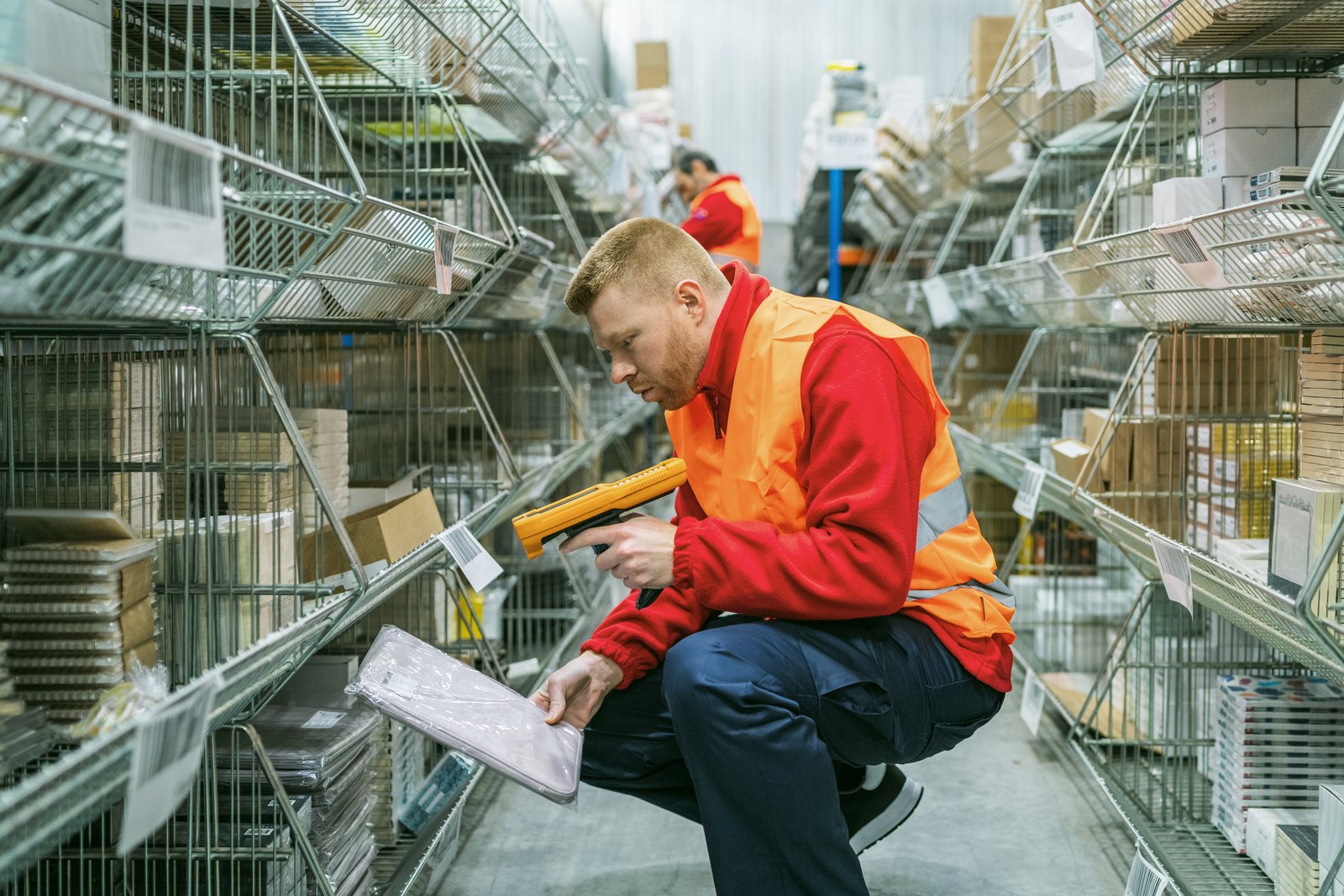
Returns were historically handled as an exception process. Volumes were low, the freight arrived unannounced, and nobody knew the condition of a unit until somebody opened the box.
That uncertainty produced a design decision. Returns were received into storage, held until someone could inspect them, then dispositioned in batches. Storage was the buffer that absorbed the not knowing.
Why the resting model has stopped working
Volume has broken the batch. Return rates in online retail run several times higher than in physical retail, and the processing capacity built for exceptions is now carrying a continuous flow.
Value decays faster than the batch cycle. A seasonal or fast-moving unit loses resale value every week it waits for inspection. The storage that absorbs uncertainty also destroys the asset it is protecting.
Regulatory scope has widened. Packaging recovery, waste tracking, and disposal reporting now sit inside statutory disclosure. Under CSRD, the movements and outcomes of the reverse flow form part of the reported picture rather than sitting outside it.
Buyers are restructuring around this. Deloitte found that 66% of retail executives surveyed plan to restructure their supply chains if input costs rise, and that 30% already use AI for supply chain visibility, rising to an expected 41% within a year.
The structural problem in the returns flow
Warehouse management systems govern inventory with a known status. A returned unit has no status until it is inspected, so it sits outside the model until someone creates a record for it.
Transport management systems plan movement against orders. A return has no order, so it moves as unplanned freight.
Visibility platforms confirm the unit arrived. They cannot decide what happens to it.
The consequence is that the disposition decision, which is the only decision that determines whether the unit retains value, is made last, manually, and after the unit has already consumed storage and handling cost.
How cross-docking works in reverse
The mechanism is the same as forward cross-docking with the direction inverted. Inbound returns are identified on arrival, grouped by disposition rather than by destination, and moved onward without entering storage.
Grouping by disposition is the difference. In forward flow, freight is sorted by where it is going. In reverse flow, it must be sorted by what it is going to become, which requires the condition and outcome decision to be made at the point of receipt rather than after it.
The four return types and how each should flow
Packaging and asset recovery. Pallets, crates, and reusable containers. Predictable volume, known condition, no inspection required. The strongest candidate for cross-docking, and usually the first flow to convert.
Recall management. Defined product, defined destination, defined timeline. Volume is high and the disposition is decided in advance, so the unit never needs to rest.
Warranty and repair returns. Destination is the repair centre, which is known on arrival. Condition affects the repair path rather than the routing, so these flow well provided the unit can be identified against its original record.
General consumer returns. The hardest case. Condition is unknown, disposition is undecided, and arrival is unpredictable. These suit cross-docking only where condition can be assessed at receipt and resale routing decided immediately.
Where cross-docking fails in reverse logistics
Cross-docking in reverse depends on the disposition decision being available at the moment of arrival. Where it is not, the model does not remove storage. It moves the storage somewhere less suitable.
Three conditions break it. Unpredictable inbound arrival, because the flow cannot be staffed to a curve nobody can forecast. Freight requiring quarantine, specialist handling, or documentation, because the compliance step cannot be compressed. Low volume, because there is no consolidation benefit to capture.
Below a certain return volume, the model does not pay back the coordination effort. Cross-docking is a density strategy in reverse just as it is in forward flow.
What the evidence shows
McKinsey research into mid-mile and last-mile handovers found that waste created at blind handoffs between shippers, dispatchers, third-party logistics providers, and carriers accounts for between 6% and 13% of carrier revenue, with dwell time named as a leading driver. The reverse flow contains more blind handoffs than the forward flow, because the arriving unit carries no order record.
Across MIXMOVE deployments, hub operations have recorded up to 130% higher warehouse hub throughput, up to 80% fewer errors, up to 50% less warehouse space, and up to 58% labour cost savings. The platform is in use across 35+ distribution companies in 20+ countries.
At 3M, a decade of collaboration produced a 35% reduction in transport costs, a 50% reduction in CO₂ emissions, and a 90% truck fill rate.
“By using the MIXMOVE software, 3M managed to reduce transport costs by 35% and CO₂ emissions by 50%.”
— Patrick Van De Vyver, Former Head of EMEA Logistics Operations, 3M
How MIXMOVE HUB OS reads the returning unit
MIXMOVE HUB OS identifies inbound freight at item level on arrival, which is the capability the reverse flow lacks. A returning unit is matched against its original despatch record before unloading, so its identity, original order, and expected condition are known at the dock rather than discovered later.
Disposition routing then happens at receipt. Units for resale are grouped for restocking. Units for repair are consolidated to the repair destination. Recovery assets are batched for return. The decision reaches the dock team at the point of work rather than sitting in a system they cannot see.
MIXMOVE HUB OS runs alongside an existing TMS, WMS, or ERP as an orchestration layer, or as a standalone platform where no system currently governs the returns dock.
MIXMOVE DI turns the resulting record into network-level reporting. Because every reverse movement is captured as it happens, packaging recovery rates, disposal volumes, and reverse transport emissions can be reported from execution data, with Scope 3 transport figures structured to ISO 14083 methodology.
A returned unit loses value every day it waits. Storage is the mechanism that makes it wait. Operations that decide disposition at the dock stop paying to destroy their own inventory.
Read the MIXMOVE HUB OS overview to see how item-level identification changes the returns dock.
Frequently asked questions
What is reverse logistics?
The management of goods moving from the customer back towards the seller or manufacturer, covering returns, warranty repair, refurbishment, packaging and asset recovery, recall management, recycling, and disposal.
Does cross-docking work for returns?
It works where the disposition decision can be made at the point of arrival. Packaging recovery, recalls, and warranty returns suit it well. General consumer returns suit it only where condition can be assessed at receipt.
What is the main obstacle to cross-docking returns?
The arriving unit carries no order record, so its identity, condition, and destination are unknown. Without item-level identification at receipt, the unit must be stored until somebody inspects it.
What does a system need to support reverse cross-docking?
Item-level identification of inbound returns matched against the original despatch record, disposition routing decided at receipt, instructions delivered at the point of work, and a captured record covering recovery rates and reverse transport emissions.