Supply chain disruptions cost organisations an average of 45% of one year’s cash profit, according to McKinsey analysis. Yet most operations continue to manage their networks reactively — responding to failures after they compound rather than anticipating them before they begin.
The gap between those two positions is not a question of intent. It is a question of architecture. And the Digital Supply Chain Twin is the architecture that closes it.
Digital Supply Chain Twins are moving from concept to competitive infrastructure. The evidence from live deployments is documented. The architecture is deployable today. What follows is a practical account of how it works, what it delivers, and why the timing matters.
Defining the Digital Supply Chain Twin
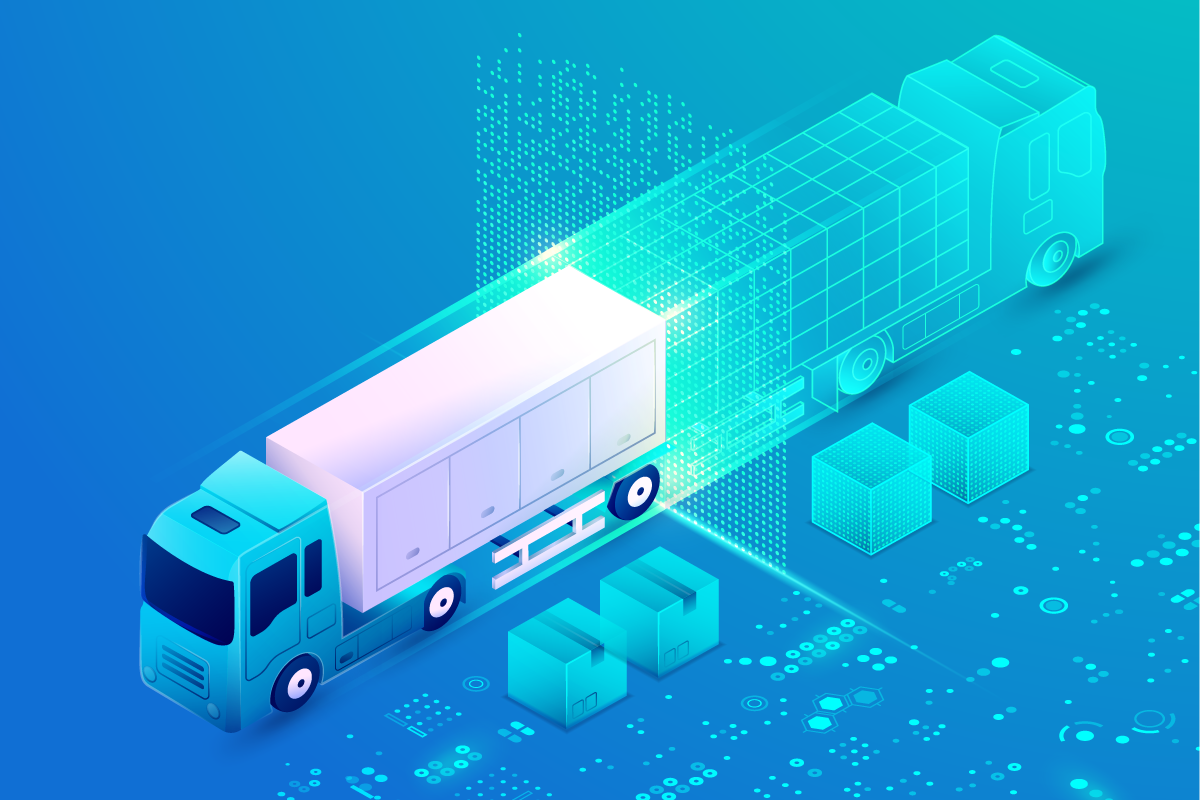
According to IBM, "a digital twin is a virtual representation of an object or system that spans its lifecycle, is updated from real-time data, and uses simulation, machine learning and reasoning to help decision-making." In supply chain terms, that means creating a continuous, live digital replica of your logistics network — every shipment, every route, every warehouse node, every transport asset — that updates in real time as physical conditions change.
McKinsey offers a more operational framing: digital twins are virtual replicas of an object, system, or process used to simulate potential situations and outcomes. They use real data to deliver analytical insights and visualisations that most organisations use to optimise operations, plan scenarios, and accelerate decision making.
The distinction between a digital twin and a conventional visibility platform is significant. Visibility platforms report on what has happened. A Digital Supply Chain Twin models what is happening, simulates what will happen next, and surfaces the options available to the people who need to act. As MIT Sloan Management Review notes, what makes digital twins powerful is their ability to emulate human capabilities, support critical decision-making, and even make decisions on behalf of humans — computing thousands of what-if scenarios and learning from each one over time.
Where the Concept Came From
The digital twin concept traces its origins to NASA’s Apollo programme in the 1960s, where engineers maintained physical replicas of spacecraft to model conditions in orbit. The term itself was formalised by NASA’s John Vickers in a 2010 Roadmap Report. In 2017, Gartner named it one of the top 10 strategic technology trends, marking the point at which adoption moved from aerospace and heavy manufacturing into broader enterprise applications.
What changed between 2010 and today was not the concept but the enabling infrastructure. The convergence of IoT connectivity, cloud computing, AI-based analytics, and falling data processing costs has made network-scale digital twin deployment commercially viable for the first time — including in logistics, where the density of real-time data from vehicles, sensors, and carrier systems now provides the raw material the technology requires.
Why the Timing Has Become Urgent
The case for Digital Supply Chain Twins was always compelling in theory. What has made it urgent in practice is the convergence of several structural pressures that have arrived simultaneously.
McKinsey’s research documents the scale of consumer expectation pressure: more than 90% of US consumers now expect two-to-three-day delivery, with one-third expecting same-day. Fulfilling those commitments requires a level of operational precision that heuristic-based logistics management simply cannot sustain at scale.
On the cost side, warehousing wages in the US rose more than 30% between July 2020 and July 2024, according to the US Bureau of Labor Statistics. Every manual process that can be replaced by a live intelligence layer becomes materially more valuable as labour costs compound.
Maersk’s Logistics Trend Map lists digital twins among the top 30 trends shaping the industry, noting that early adopters in logistics are moving from experimentation to operational deployment — with supply chain optimisation as the primary application. The global market for digital twins is projected to grow 30 to 40% annually, reaching $125 to $150 billion by 2032, according to McKinsey market analysis.
The organisations that build on this architecture now are not running pilots. They are establishing a structural advantage that compounds every quarter their competitors delay.
The Structural Problem Digital Twins Solve
Most logistics technology investments have improved individual steps in the supply chain without connecting those steps into a coherent network. A TMS optimises routing within its own dataset. A WMS improves warehouse flow within its own four walls. A visibility platform shows where a truck was. None of them coordinate across the full network, and none of them provide foresight into what is about to happen.
BCG describes this as the core challenge for heavy industry supply chains: rising volatility and complexity that individual point solutions were not designed to handle. The response — a Value Chain Digital Twin approach — builds a connected model across the entire supply chain that can be used for both operational management and strategic scenario planning.
Deloitte frames the structural destination as the Digital Supply Network: a transformation of the supply chain from a linear, sequential process into an integrated, dynamic network connected through a central digital hub. The difference between a linear supply chain and a networked one is not one of efficiency. It is one of architecture. Linear chains are optimised for steady-state operations. Networked ones are built to absorb disruption without cascading failure.
How a Digital Supply Chain Twin Works in Practice
Building and maintaining a Digital Supply Chain Twin involves five interconnected processes, each reinforcing the next.
- Data collection. IoT devices, sensors, tachographs, mobile driver applications, and carrier systems collect information continuously across the supply chain — location, temperature, humidity, vehicle status, handling events, and more. Critically, a Digital Supply Chain Twin can also be linked from physical items such as packing lists and labels using 2D barcodes, allowing on-demand access to object-level data without requiring full system integration at every touchpoint.
- Data integration. Collected data is fed into a central platform, processed, cleaned, and standardised into a unified model. This is what Deloitte calls the Digital Thread: the seamless, continuous strand of data that connects every stage of the operation and keeps the twin current. Without the thread, the twin is a static snapshot. With it, the twin is a live intelligence system.
- Modelling and simulation. Advanced modelling techniques create a digital representation of the supply chain that accounts for all variables and interactions across the network. This model can simulate how the network responds to changes before those changes are implemented physically — testing route modifications, load configurations, and contingency responses without risk to live operations.
- Real-time updates. The twin receives continuous data from the physical supply chain, updating the model to reflect actual conditions rather than planned assumptions. Deviations from plan are surfaced immediately, not at the next reporting cycle.
- Analytics and optimisation. AI-driven analytics surface performance insights, flag deviations, and generate prescriptive recommendations. As MIT Sloan Management Review observes, the technology learns from the decisions it supports, gaining in maturity and accuracy with every operational cycle.
The Three Types of Digital Twin in Logistics
McKinsey identifies several types of digital twin relevant to supply chain management. In a logistics context, three are most operationally significant.
Shipment Twins model individual consignments from origin through delivery, providing real-time ETA calculation, multi-source tracking, temperature and condition monitoring via IoT sensors, and deviation alerts the moment a consignment drifts from its constraints. For shippers, this eliminates the need to query carriers for status updates — the information is always current.
Trip Twins connect to and upgrade TMS and transport planning tools with live execution intelligence. Where a TMS captures the plan, the Trip Twin measures execution against it: KPI compliance, security constraint monitoring for temperature-controlled shipments, and geofence milestone events that feed tracking in real time. Critically, trip-level emissions can be calculated from execution data and used as a planning performance signal — not just a regulatory output.
Transport Asset Twins provide the asset-level intelligence that makes planning accurate. Expected fill rate projected forward in time and location. Available driving hours drawn from tachograph data. Predictive vehicle positioning. Maintenance schedules factored into fleet availability so planners are never working from a capacity picture that does not reflect reality.
When these three layers are interconnected, the intelligence they produce is greater than the sum of their parts. Asset twin data improves trip planning precision. Trip twin data surfaces shipment compliance signals before SLAs break. Shipment twin data closes the loop back to demand planning. No system access is shared between parties. No direct integration is required between any two parties.
What the Evidence Shows
The outcomes from digital twin deployments are now sufficiently well documented to move beyond projections. McKinsey’s November 2024 analysis of live deployments across manufacturing, retail, and logistics documents the following:
- A 5% reduction in last-mile transport costs, from an OEM that used digital twin intelligence to detect carrier performance shifts and surcharge changes in real time — before they reached the invoice.
- An 8% reduction in freight and damage costs, from a global OEM that optimised outbound logistics policies fed directly into its TMS.
- A 15% reduction in total distribution centre costs, from a CPG company that modelled variable demand and labour through digital twin simulation.
- A 20% improvement in consumer promise fulfilment, a 10% reduction in labour costs, and a 5% revenue uplift — from a single retailer deployment connecting planning, inventory, and TMS through a unified digital twin layer.
The mechanism behind every result is consistent: better information, applied faster, across the full network. The interventions were not structural overhauls. They were decisions made from a live operational picture rather than a compiled report.
Deloitte’s research adds further dimensions: companies effectively implementing digital twin technology report 25% faster time-to-market, 20 to 30% reduction in operational costs, and a 20% reduction in unexpected work stoppages through predictive maintenance. McKinsey analysis also notes that digital twin adoption can increase decision-making speed by up to 90% — a figure that reflects the shift from manual data compilation to real-time intelligence surfaces.
MIXMOVE and the Digital Supply Chain Twin
MIXMOVE HUB OS and MIXMOVE DI are built on digital twin architecture from the ground up — not as an additional feature layer, but as the foundational data model on which both products operate.
“Digital twinning is a core element in MIXMOVE platform design. Its role is to improve information exchange, provide access to real-time data, and simulate detailed logistics operations that cannot be captured through more traditional mathematical modelling approaches. Digital twinning also enables the modelling of uncertainty in disruptive events, as well as subsequent recovery operations.”
— Nuno Bento, CTO & Co-Founder, MIXMOVE
MIXMOVE runs three interconnected digital twin layers — Shipment, Trip, and Transport Asset — forming a single closed intelligence loop across every actor in the operation. The Shipment Twin serves the shipper. The Trip Twin upgrades the 3PL’s planning tools. The Transport Asset Twin provides the carrier-level intelligence that makes planning accurate rather than assumed.
MIXMOVE HUB OS captures every billable event, handling action, and operational signal at the node — turning physical execution into the data stream that feeds the twin. MIXMOVE DI takes that operational data and produces freight audit results, CSRD-compliant Scope 3 carbon reports structured to ISO 14083 methodology, and network-level decision support. Without a separate process. Without manual compilation.
Deployed across 35+ distribution companies in 20+ countries, the results from live MIXMOVE deployments include a 35% reduction in transport costs and 50% reduction in CO₂ emissions at 3M EMEA, and 130%+ hub throughput increases in global 3PL deployments.
MIXMOVE connects your existing TMS, WMS, and ERP into a single intelligent orchestration layer — or operates as a standalone platform depending on what works best for your operation. No replacement project. No disruption to existing infrastructure.
The Shift From Reporting to Acting
The Digital Supply Chain Twin is not a new category of software that replaces what already exists. It is the architecture that connects what already exists into a network capable of thinking, predicting, and responding.
The supply chain has been managed as a linear sequence for more than 50 years: production to warehouse to transport to customer. Every system built to support that sequence was designed to optimise one step. Digital twins break the sequence — not by changing the physical flow, but by connecting the data flowing through it into a single continuous intelligence layer available to every actor simultaneously.
The evidence from live deployments is clear. The technology is commercially deployable today. The structural advantage it creates compounds every quarter it is in place.
The data to run your supply chain better already exists. The question is whether the architecture is in place to act on it.